For Children
One Imam a Month: A Family Plan to Meet the Twelve Imams in a Year

Why an Imam a month
Most children learn the Twelve Imams as a list to memorise. Names without stories are forgotten. A month gives each Imam room to become a person: what he cared about, what he did and what he asks of us.
The Quran speaks of the family of the Prophet (P.B.U.H) with honour. “Allah only intends to remove from you impurity, O people of the House, and to purify you thoroughly.” (Quran 33:33) The verses around it speak to the Prophet’s (P.B.U.H) wives, but this sentence is understood in Shia belief to refer to his Ahlul Bayt (A.S), the Five Pure Ones. And: “Say, I do not ask of you any reward for it except love for my near relatives.” (Quran 42:23) Shia scholars understand the near relatives to be the Ahlul Bayt (A.S). A plan like this one is a way of putting that love into practice, one person at a time.
How each month works
- Week 1: Meet. Read a story about the Imam. Ask: “What did you notice about him?”
- Week 2: One value. Pick the quality from the list below and name it at home.
- Week 3: One action. Practise the value in a small family habit.
- Week 4: Remember. Make a card, draw a picture or tell the story back. End with salawat: Allahumma salli ‘ala Muhammadin wa Ali Muhammad.
The twelve months
Month 1: Imam Ali (A.S), knowledge and justice
Value: asking questions and being fair. Habit: each day, ask one question you do not know the answer to, and look it up together.
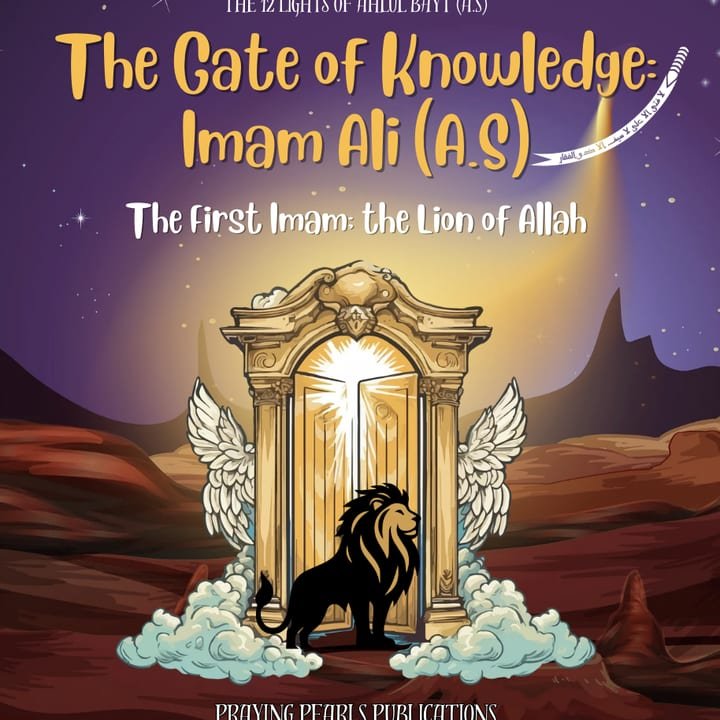 The Gate of KnowledgeImam Ali (A.S), the First Imam · the First Imam · Ages 7+
Month 2: Imam Hassan (A.S), peace and generosity
Value: choosing peace when it is the harder road. Habit: each day, share something with someone who did not ask.
 The Gentle Prince of PeaceImam Hassan (A.S), the Second Imam Who Chose Peace Over War · the Second Imam · Ages 7+
Month 3: Imam Hussain (A.S), standing for truth
Value: telling the truth when it is hard. Habit: each day, notice a moment when someone did the right thing, and say so.
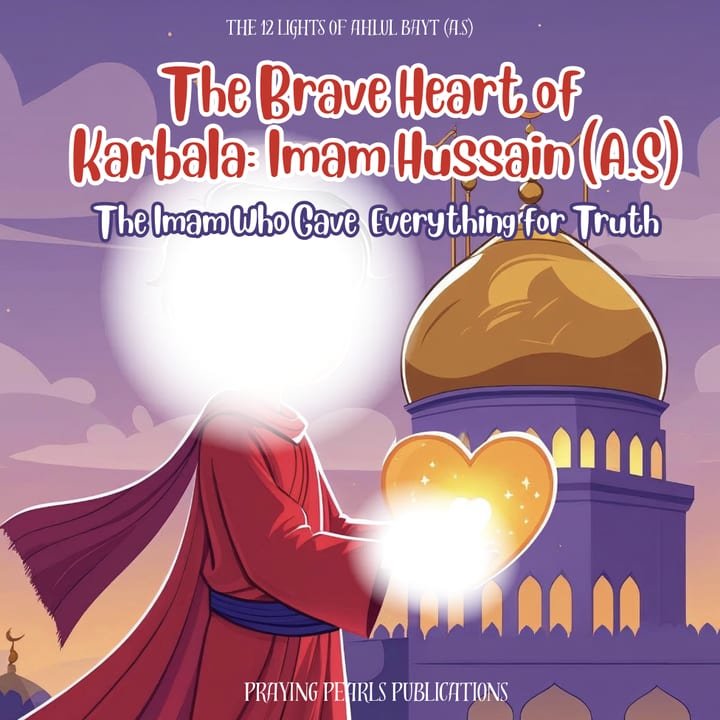 The Brave Heart of KarbalaImam Hussain (A.S), the Third Imam · the Third Imam · Ages 4–10
Month 4: Imam Zain ul Abideen (A.S), dua
Value: talking to Allah. Habit: a short dua together every night. The Quran says: “Call upon Me; I will respond to you.” (Quran 40:60)
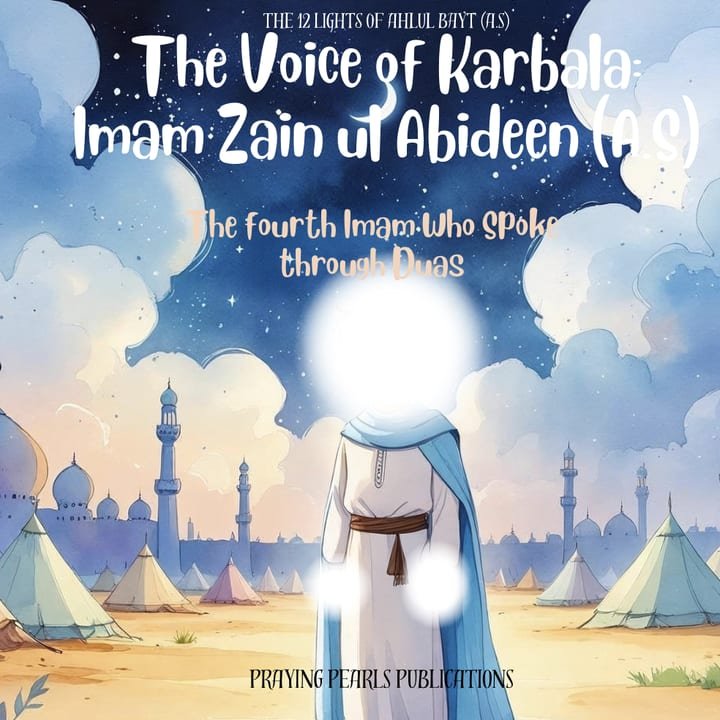 The Voice of KarbalaImam Zain ul Abideen (A.S), the Fourth Imam Who Spoke Through Duas · the Fourth Imam · Ages 7+
Month 5: Imam Muhammad al-Baqir (A.S), learning
Value: love of knowledge. Habit: each evening, everyone shares one thing they learned today.
 The Ocean of KnowledgeImam Muhammad al-Baqir (A.S), the Fifth Imam Who Revived Islamic Knowledge · the Fifth Imam · Ages 7–15
Month 6: Imam Jafar al-Sadiq (A.S), teaching and curiosity
Value: sharing what you know. Habit: let your child teach you something once a week.
 The Wonders of Science and FaithImam Jafar al-Sadiq (A.S), the Sixth Imam · the Sixth Imam · Ages 7–14
Month 7: Imam Musa al-Kazim (A.S), patience
Value: keeping calm when angry. His title, al-Kazim, refers to restraining anger. The Quran praises “those who restrain anger and who pardon the people.” (Quran 3:134) Habit: take three slow breaths before answering when upset.
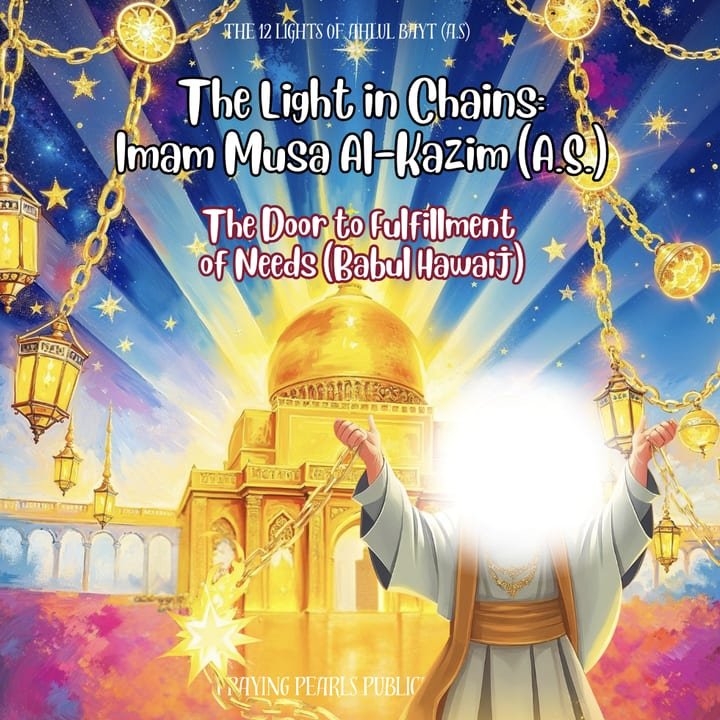 The Light in ChainsImam Musa al-Kazim (A.S), the Seventh Imam, Babul Hawaij · the Seventh Imam · Ages 7–15
Month 8: Imam Ali al-Ridha (A.S), kindness to others
Value: welcoming people. Habit: greet every person at home and school with a smile and salam.
 The Wise HealerImam Ali al-Ridha (A.S), the Eighth Imam, the Healer of Hearts · the Eighth Imam · Ages 7–12
Month 9: Imam Muhammad al-Jawad (A.S), wisdom at any age
Value: taking children’s questions seriously. He became Imam at a young age. Habit: once a week, ask your child for their opinion on a family decision.
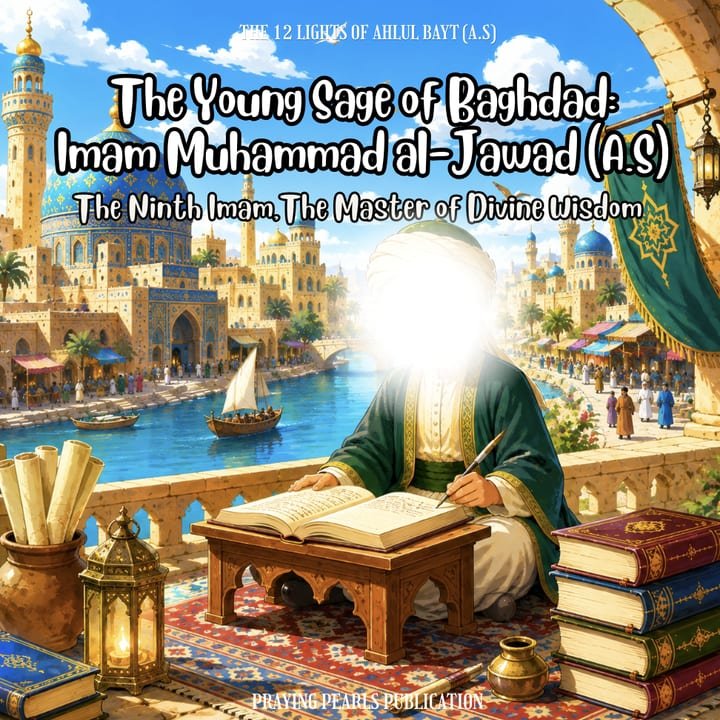 The Young Sage of BaghdadImam Muhammad al-Jawad (A.S), the Ninth Imam · the Ninth Imam · Ages 7–12
Month 10: Imam Ali al-Hadi (A.S), steadfastness
Value: keeping faith under pressure. Habit: one prayer a day done on time, even on a busy day. We do not yet have a book on the Tenth Imam. Use a short story from your library and our free printables.
Month 11: Imam Hassan al-Askari (A.S), quiet strength
Value: patience, and doing good without being seen. Habit: one kind act every day that no one is told about.
Month 12: Imam Muhammad al-Mahdi (A.S) (A.J.), hope
Value: hope that does not run out. Shia Muslims await the Twelfth Imam. The Quran says: “Do not despair of relief from Allah.” (Quran 12:87) Habit: each day, write or say one thing you are hopeful about.
Making it stick
- Put it on the wall. A chart with twelve circles. Colour one each month.
- Keep it small. One story, one value, one habit. Skip a week and carry on.
- Let children lead. Ask: “Which Imam do you want to know more about?”
- Be honest about what you do not know. Say “let’s find out,” and look it up with a trusted source.
Our free Muharram printables are a good companion for Month 3, the month of the Third Imam.
Why this is worth your time
A plan like this gives your child something a list never can: a relationship with each Imam, built slowly. By the end of the year they will have met every Imam, practised twelve good habits and shared with you twelve months of small, ordinary moments around the family of the Prophet (P.B.U.H).
Common questions
Does the plan have to start in Muharram?
No. Start in any month. If your family likes to mark the Imams’ birthdays and days of mourning, you can match each month to the Imam whose occasion falls in it.
What if my child is too young for long stories?
Use one short story a week, a rhyme or a picture book, and pair it with a simple action. The point is familiarity and love, not completeness.
Do you have a book for every Imam?
Not yet. The 12 Lights of Ahlul Bayt (A.S) series has nine volumes so far, from the First Imam to the Ninth. For the Tenth to the Twelfth, use short stories from your own library and the free printables on our resources page.
How do I keep the habit going?
Put it on the calendar. A fixed time, one person who owns the reminder and a visible chart make the difference between a plan and a habit.