For Children
Sahifa Sajjadiya Duas for Children: Forgiveness and Keeping Shaytan Away
Why read this: the Sahifa is one of the most beautiful books a Shia family can own, and it is also one of the hardest to bring to a child. Many translations read like a legal document. This is a guide for parents who want their children to feel what these duas are saying, in language that a six-year-old can carry.
Who wrote it, and why it matters for children
Imam Ali (A.S) ibn al-Hussain, known as Zain ul Abideen (A.S) and al-Sajjad, is the fourth Imam. He was present at Karbala and survived it. In the years that followed, he taught people how to turn to Allah through dua, and those supplications were collected into al-Sahifa al-Sajjadiyya.
That background is useful to a child. A young man who has lost his father and his family, and who is being watched by people who want him silent, is not teaching revenge or despair. He is teaching how to speak to Allah. That is a powerful thing to know about a person before you ever read his words.
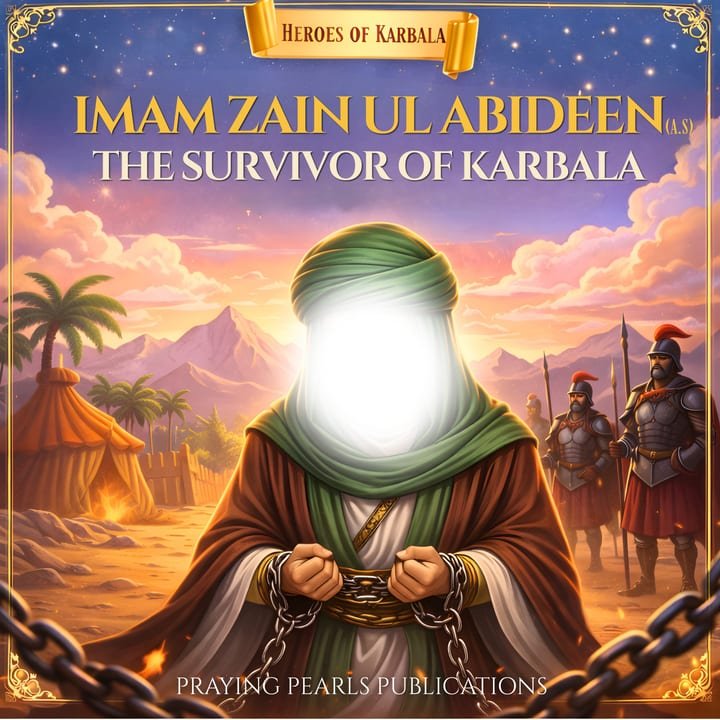 Imam Zain ul Abideen (A.S)The Survivor of Karbala · his story for children · Ages 7–14
How to teach these duas to a child
Resist the urge to start with the Arabic. Use three steps in this order.
- Name the feeling. “You look like you feel bad about what happened with your sister.”
- Tell them what the dua is for. “Imam Sajjad (A.S) taught us what to say when we feel this.”
- Let them say it in their own words, and then add a line of the original when they are ready.
The aim is not memory. It is that the child learns a sentence they will reach for on their own, for years.
Duas about forgiveness
There are four supplications to know about. I describe their ideas here rather than copy the translations, because you should read them in a good edition and, better still, with an adult beside you who can explain.
Dua 12: the supplication in confession
This is the dua of saying plainly what we have done, honestly, before Allah. For a child, the lesson is that you do not have to hide a mistake. You can bring it to Allah and name it.
Dua 31: the supplication in repentance
Repentance is more than saying sorry. It is turning back. This dua asks Allah for a sincere return and for the strength not to go back to the same mistake. With a child you can say: “Sorry is the first step. Trying again is the second.”
Duas 38 and 39: asking pardon, and seeking pardon and mercy
Dua 38 asks pardon for the ways we fall short towards other people: not helping, not forgiving, not being kind. For a child, it teaches that saying sorry to Allah includes thinking about how we treated others.
In Dua 39, the Imam asks Allah to pardon, and he also forgives those who wronged him. For a child, the lesson is simple: when we forgive others, we ask Allah to forgive us. Both duas rest on the hope that Allah’s mercy is bigger than any mistake.
A family version in your own words: “Ya Allah, I made a mistake. I am sorry. Please forgive me and help me do better.” That is not a line from the Sahifa. It is a doorway into it.
Duas for protection, and keeping Shaytan away
Children do not need a frightening picture of Shaytan. They need to know that the little voice that says “go on, nobody will see” is not their friend, and that Allah can protect them from it.
Dua 8: the supplication in seeking refuge
This dua asks Allah for protection from harmful habits of the heart, such as anger, envy and greed, and from carrying on with what is wrong. For a child it is a way to say: “Help me, Allah, because some things are hard for me to stop.”
Dua 17: the supplication against Shaytan
Imam Zain ul Abideen (A.S) asks Allah to protect us from Shaytan’s whispering and his plots, and for help in turning away when he calls. It treats Shaytan seriously without making him powerful. That is the right tone for a parent.
A family version in your own words: “Ya Allah, keep me away from bad whispers. Help me hear the good voice, and do what is right.”
Tell children it is normal to hear the whisper. The question is only what we do next.
Make it part of the day
- Bedtime. Two minutes. “Is there anything you want to say sorry to Allah for today?” Then the family version.
- Right after a quarrel. Not as a punishment. As a repair. Say it together.
- When they tell you about a bad thought. Thank them for telling you first, then say the protection dua together.
Why the Sahifa, and not just any dua
You can teach a child to say sorry in any words. The reason to bring the Sahifa in as they grow is that it gives them an inheritance. These are the words of the fourth Imam. When a teenager later opens the book and finds the same ideas they learned at six, in language that has grown up with them, the dua belongs to them.
We published an edition with the Arabic and English together for exactly this reason.
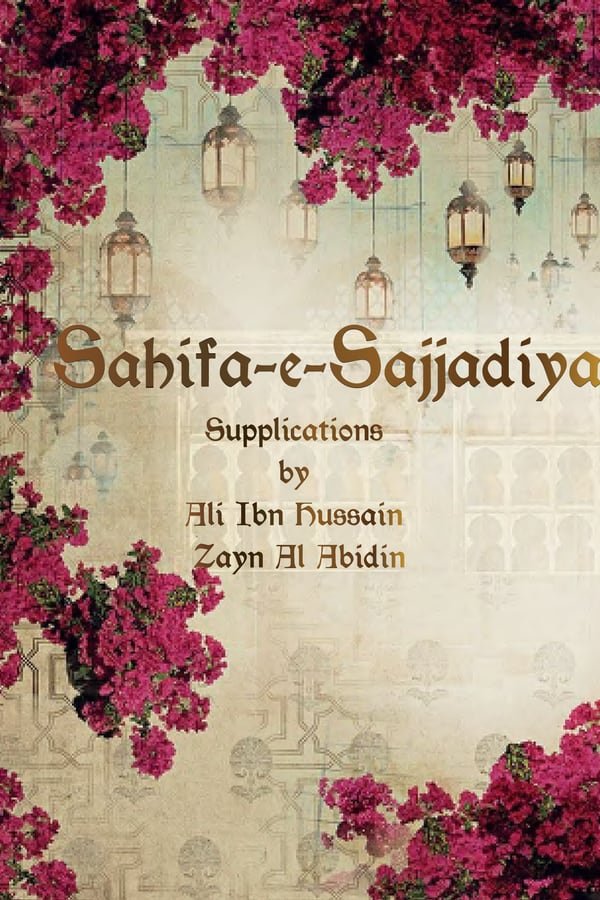 Sahifa-e-SajjadiyaSupplications by Ali Ibn Hussain Zayn Al Abidin · Arabic and English · Adults
And for the youngest children, start with short books about feelings and what to say to Allah.
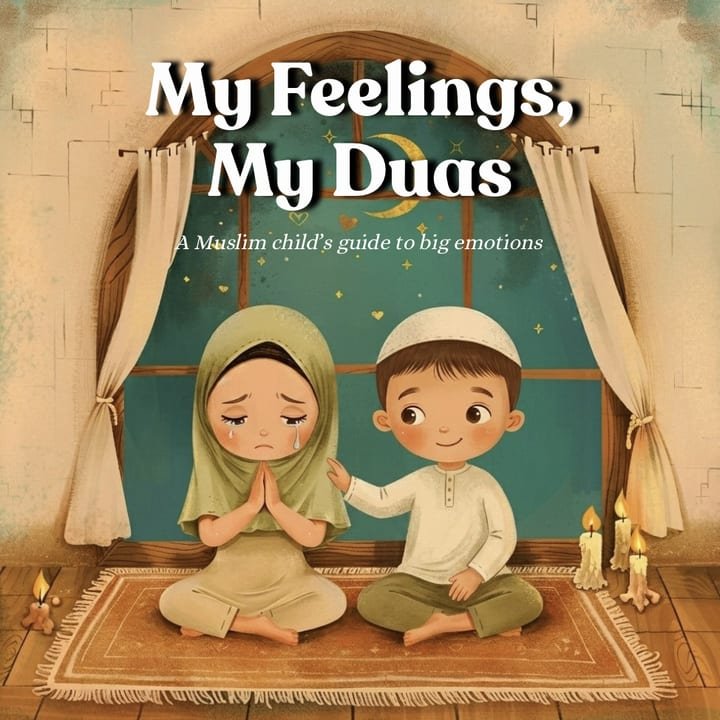 My Feelings, My DuasA Muslim Child’s Guide to Big Emotions · ages 5 to 9 · Ages 5–9
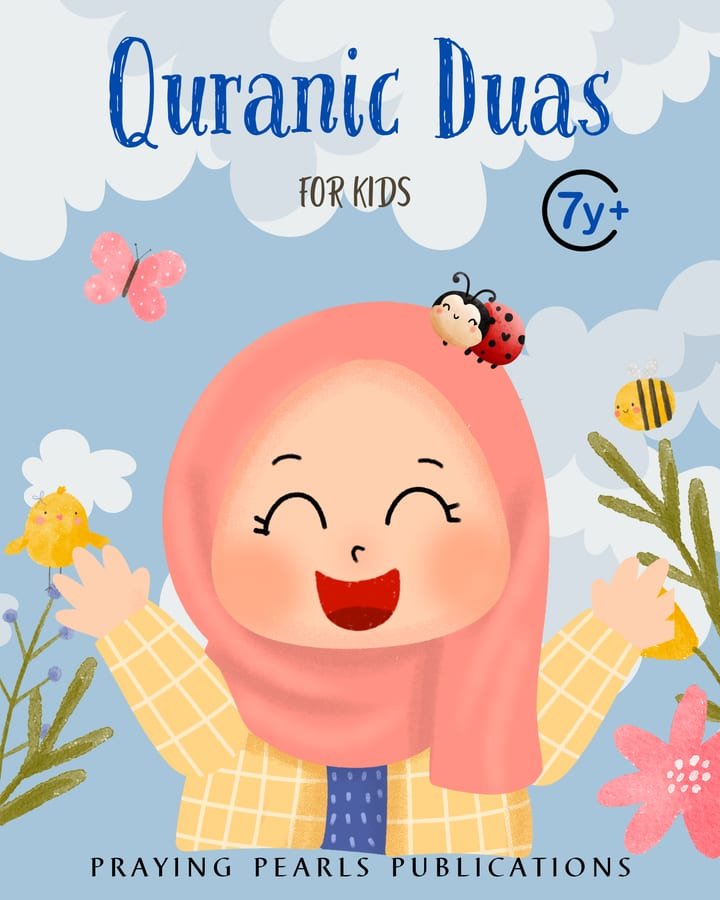 Quranic Duas for KidsIslamic Values (Talking to Allah) · short duas from the Quran
Common questions
What is al-Sahifa al-Sajjadiyya?
It is a collection of 54 supplications from Imam Zain ul Abideen (A.S), the fourth Imam and the survivor of Karbala. Shia Muslims honour it as one of the great books of dua.
Which Sahifa duas are about forgiveness?
The twelfth is the supplication in confession, the thirty-first is the supplication in repentance, and the thirty-eighth and thirty-ninth are about asking pardon and mercy.
Which Sahifa duas are about keeping Shaytan away?
The seventeenth is the supplication against Shaytan. The eighth asks refuge from harmful habits of the heart, such as anger, envy and greed.
At what age can a child learn these duas?
Children as young as four or five can learn the idea, “I did something wrong, I am sorry, please forgive me, Allah”, in their own words. The text itself is better kept for older children and teens, read together with a good translation.