For Children
Teaching the 99 Names of Allah to Children, One Name at a Time

Why teach the Names at all
Children learn that Allah is great before they learn how Allah cares for us. The Names fill that gap. They tell a child that Allah forgives, protects, provides, hears and is near. The Quran invites us to learn them and use them:
The Quran also reminds us that the Names are not a decoration but a way of speaking to Allah: “Call upon Allah or call upon the Most Merciful. Whichever you call, to Him belong the Most Beautiful Names.” (Quran 17:110) And at the end of Surah al-Hashr the Quran names several of them in a row: “He is Allah, the Creator, the Inventor, the Fashioner.” (Quran 59:24)
This guide is for you if you have tried to teach the Names as a list and watched your child recite them without feeling anything. The fix is simple: slow down and attach each Name to a moment.
The idea: one Name, one moment
Every Name you teach should have a place in the day where it belongs. Then it is not a word on a chart; it is something your child says when it matters. You can start with these twelve moments.
Twelve moments, and the Names that fit them
1. Ar-Rahman, Ar-Rahim (the Most Gracious, the Most Merciful)
The moment: every Bismillah, at the start of a meal, a drawing, a journey. Tell your child: “Allah’s mercy is bigger than anything we do.” The Quran opens with it: “In the name of Allah, the Most Gracious, the Most Merciful.” (Quran 1:1)
2. Ar-Razzaq (the Provider)
The moment: when you sit to eat. Ask: “Who made this food grow?” The Quran says: “Indeed, it is Allah who is the Provider, the Possessor of firm strength.” (Quran 51:58)
3. Al-Khaliq (the Creator)
The moment: a walk, rain on the window, a ladybird on the path. Say: “Look what Al-Khaliq made.” (Quran 59:24)
4. As-Sami’ and Al-Basir (the All-Hearing, the All-Seeing)
The moment: when a child is playing alone, or whispering a wish. They are never unheard. “And He is the Hearing, the Seeing.” (Quran 42:11)
5. Al-Ghaffar (the Perpetual Forgiver)
The moment: after a mistake, once everyone is calm. The Quran says: “And indeed, I am the Perpetual Forgiver of whoever repents, believes and does righteousness, and then continues in guidance.” (Quran 20:82) Say: “We can always go back to Allah.”
6. Al-Latif (the Subtle, the Kind)
The moment: when something small and lovely happens at just the right time: a lost toy found, a friend’s kind word. “He is the Subtle, the All-Aware.” (Quran 6:103)
7. Al-Hafiz (the Protector)
The moment: bedtime, a car journey, the first day at a new school. In Surah Yusuf, Prophet Yaqub (A.S) says: “But Allah is the best guardian, and He is the most merciful of the merciful.” (Quran 12:64)
8. Al-Wadud (the Loving)
The moment: a hug, a goodnight kiss. “And He is the Forgiving, the Affectionate.” (Quran 85:14) Tell your child that the love they feel from you points to a love far greater.
9. Al-Qarib (the Near)
The moment: when a child is scared, lonely or sad. “And when My servants ask you concerning Me, indeed I am near. I respond to the call of the caller when he calls upon Me.” (Quran 2:186)
10. Al-Wakil (the One we trust with our affairs)
The moment: before a test, a visit to the doctor, a worrying day. The Quran gives us the words: “Sufficient for us is Allah, and [He is] the best Disposer of affairs.” (Quran 3:173)
11. As-Salam (the Source of Peace)
The moment: when anger or tears are rising. Breathe together and say the Name slowly. (Quran 59:23)
12. Al-‘Alim (the All-Knowing)
The moment: every “why?” your child asks. “And He is Knowing of all things.” (Quran 2:29) Then teach the dua the Quran gives us: “My Lord, increase me in knowledge.” (Quran 20:114)
Twelve moments, each with a Name. That alone gives a child a lifetime of reasons to say “Ya Allah” with meaning.
A three-minute routine that works
- Say it. The Name, once, slowly, with the Arabic sound.
- Give one sentence. “Ar-Razzaq means the One who provides everything we have.”
- Place it. “We will say it every time we sit to eat this week.”
- Make it. A drawing, a card for the fridge, a hand gesture.
- Use it in a dua. “Ya Razzaq, thank you for this food.”
The Quran invites exactly this when it says to call on Allah by His Names (7:180). A Name used in a dua is learned for good.
By age
- Ages 3 to 4. One Name a week. Repeat it at the same moment each day. Keep the meaning to one short sentence.
- Ages 5 to 7. One Name a day for a month. Add a story from their own life: “Remember when you found your shoe? That was Al-Latif.”
- Ages 8 to 12. Add the Quranic verse, the meaning of the Arabic word, and a habit that matches the Name: forgive a sibling for Al-Ghaffar, share your food for Ar-Razzaq.
Three mistakes to avoid
- Racing through the list. Ninety-nine Names in ninety-nine days is a challenge, not an education.
- Teaching only the Names of power. A child needs to hear mercy, nearness and forgiveness at least as often as strength.
- Testing instead of using. “Say it again” teaches fear of getting it wrong. “Let’s say it together when we pray” teaches love.
Books that help you do this
Our illustrated book walks through the Names one at a time, with a simple explanation for each, so you can read it alongside this routine.
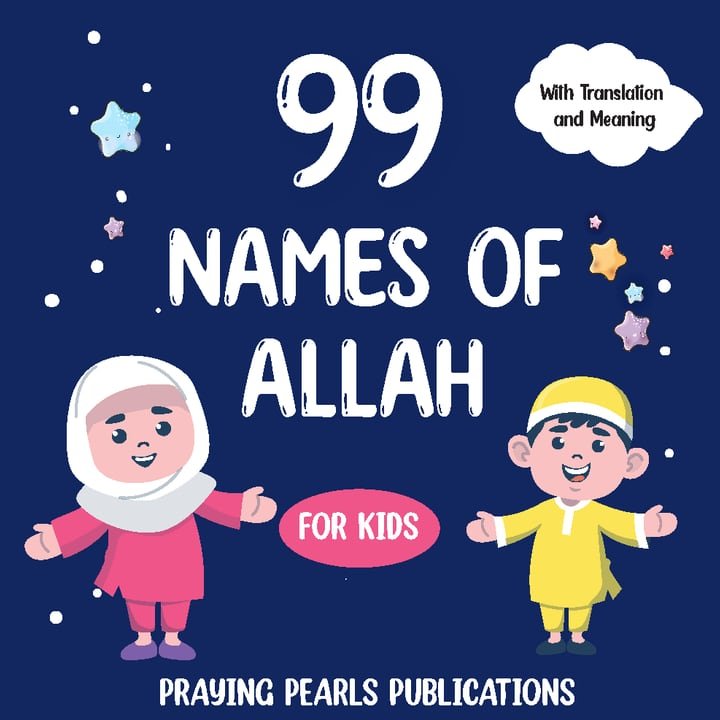 99 Names of AllahAsma ul Husna for Children: Learn the Beautiful Names of Allah · one Name at a time · Ages 5–12
For moments that need a short dua, these pair well with the Names above.
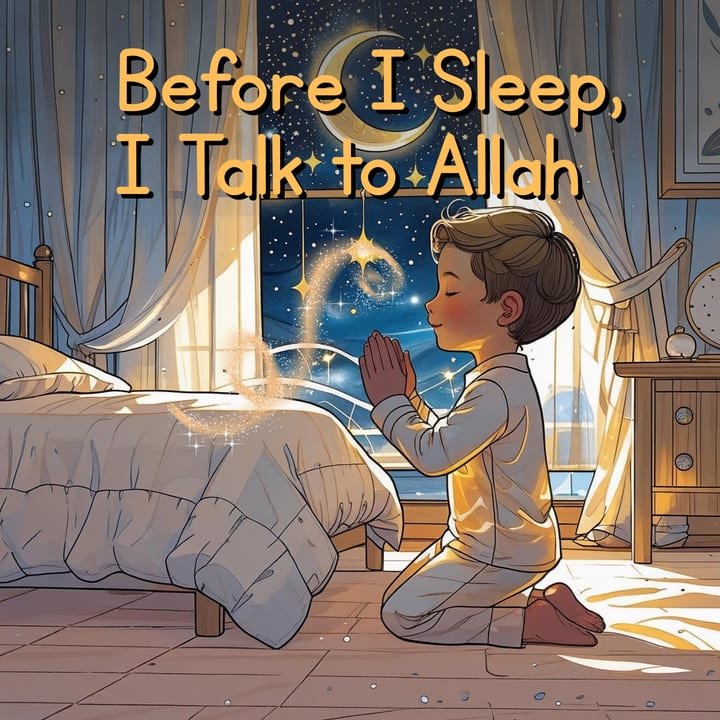 Before I Sleep, I Talk to AllahA Bedtime Book of Gratitude and Prayers · bedtime duas
 When I’m Happy, I Thank AllahIslamic Books for Kids (Talking to Allah) · thank Allah for happy moments · Ages 3–10
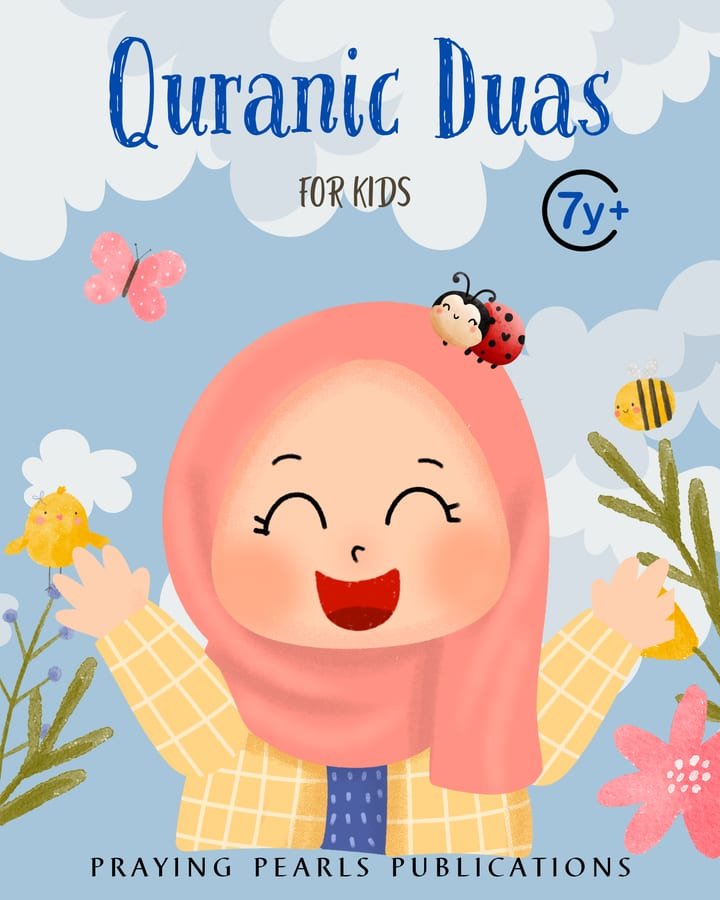 Quranic Duas for KidsIslamic Values (Talking to Allah) · short duas from the Quran
Why this is worth your time
A child who knows that Allah is Al-Qarib (the Near) does not feel alone in the dark. A child who knows Al-Ghaffar (the Forgiving) can say sorry without hiding. These are not facts for an exam. They are the beginnings of a relationship that your child will carry into every difficult day.
Common questions
At what age can children start learning the Names of Allah?
From about three. At that age, one Name a week with a simple meaning and a moment attached is plenty. From five or six, one Name a day works well. Older children can add the Quranic verse and the meaning behind the word.
Which Name should I teach first?
Ar-Rahman and Ar-Rahim, the Most Gracious and the Most Merciful. They open nearly every chapter of the Quran and every Bismillah, so your child already hears them every day.
Is there one official list of the 99 Names?
Lists differ slightly between collections, though they agree on the great majority of Names. Choose one list, keep to it, and let your child learn from that one.
How do I make a Name stick?
Attach it to a fixed moment, say it aloud, say what it means in one sentence, and use it in a short dua: “Ya Razzaq, thank you for this food.” Repetition inside real life does the work.