Duas and Healing
Dua-e-Kumayl: Why It Matters and How to Make It a Habit

Why read this: Dua-e-Kumayl is one of the best known supplications in Shia Islam, and many people say it every Thursday night without ever having been shown what it is for. This is a plain guide to why it matters and how to make it part of your week, without feeling like you have to be an expert first.
What Dua-e-Kumayl is
It is a supplication that Imam Ali (A.S) taught to one of his companions, Kumayl ibn Ziyad al-Nakha’i. That is why it carries his name. Shaykh al-Tusi gives it in Misbah al-Mutahajjid, where it is also described as the supplication of Khidr, and it has been recited by Shia Muslims for centuries since.
It is not a short dua. It moves slowly through admitting faults, asking for forgiveness, describing who Allah is, and trusting Him. If you read it in order, you will notice it is not rushing to a request. It spends a long time on honesty first.
How it was taught
Sayyid ibn Tawus tells the account in Iqbal al-A’mal. Kumayl was sitting with Imam Ali (A.S) in the mosque of Basra when the Imam was asked about a verse of the Quran, 44:4, which speaks of a night when every matter is decided. The Imam explained that it was the eve of the 15th of Sha’ban, a night when the year’s affairs are set.
Kumayl then asked the Imam for a supplication, and the Imam taught him this one. He told him to learn it and recite it on the eve of Fridays, or once a month, or once a year, or at least once in his lifetime.
That last instruction is worth noticing. It lowers the bar. If you have never recited it, the Imam’s own answer is: once, at least. You do not need to begin with a perfect routine.
Why it matters
Allama Majlisi regarded it as one of the finest supplications. But here is the more personal reason it lasts. Most of us do not know how to talk to Allah when we feel we have let ourselves down. Dua-e-Kumayl gives you the words for exactly that moment. It does not pretend you are fine. It says what we are really like, and then it says what Allah is really like.
Three themes run through it:
- Honesty about ourselves. It names our weakness and our mistakes without drama.
- Hope in mercy. Again and again it comes back to the idea that Allah’s forgiveness is larger than our faults.
- Nearness. It asks to be close to Allah, and to be a person who is thankful and humble.
When to recite it
- Thursday night. This is the eve of Friday, which many families keep as their regular night for it.
- The eve of the 15th of Sha’ban. The night the account is connected with.
- Once in your life, at the very least. The Imam’s own words, so there is no reason to wait for the perfect conditions.
One practical note. The text includes a verse from Surat al-Sajda, and jurists have rules about reciting verses that call for prostration, for example for someone in a state of janaba or a woman during her period. If this applies to you, ask your marja’s office how they advise reading that part.
How to make it a habit
- Read the translation once, alone, in the daytime. Do this before you plan to recite it. You will say the Arabic with far more feeling once you know what you are asking for.
- Pick your night. Thursday works for most households. Put it on the same day each week, the way you would for a family dinner.
- Listen first, then join in. If the Arabic is new to you, play a recitation and follow the English as it goes. It is perfectly fine to spend months as a listener.
- Do not rush the end. The last stretch is where many people find they are crying. Leave ten quiet minutes after, with no phone.
- Break it up if you must. If a full reading is too much for a given week, read a section and come back. Doing a part with attention is better than a whole with your mind elsewhere.
Bringing children into it
You do not need to hand a child this dua and ask them to say it. But a child who sits beside a parent on Thursday night, hears the recitation and sees their parent in tears, is learning something that no worksheet teaches: that grown-ups ask Allah for forgiveness, and that it is a safe thing to do.
For the child’s own part, give them short duas in simple language, and let Kumayl be what they overhear.
 My Feelings, My DuasA Muslim Child’s Guide to Big Emotions · short duas for big feelings, ages 5 to 9 · Ages 5–9
An edition with the Arabic and English together
We published our own edition so that you can follow the Arabic, the transliteration and the English on one page, with enough space that it is not a strain on the eyes at 2am.
 Dua-e-KumaylIllustrated, with English translation · Arabic with English · Adults
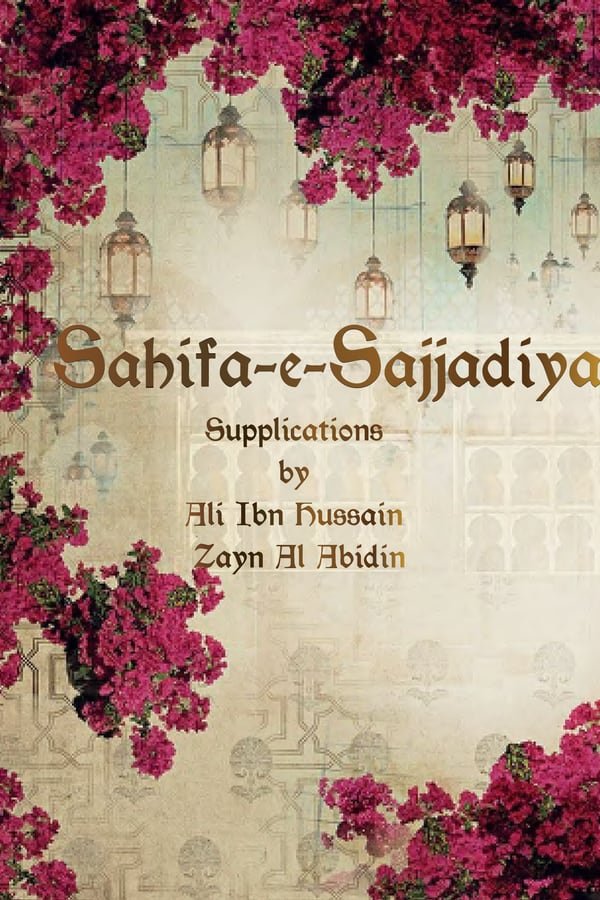 Sahifa-e-SajjadiyaSupplications by Ali Ibn Hussain Zayn Al Abidin · supplications of Imam Zain ul Abideen (A.S) · Adults
Common questions
Who taught Dua-e-Kumayl?
Imam Ali (A.S) taught it to his companion Kumayl ibn Ziyad al-Nakha’i, and it is named after him. Shaykh al-Tusi records it in Misbah al-Mutahajjid, and Sayyid ibn Tawus gives the account of how it was taught in Iqbal al-A’mal.
When is Dua-e-Kumayl recited?
On the eve of Friday, which is Thursday night, and on the eve of the 15th of Sha’ban. According to the account, Imam Ali (A.S) told Kumayl to recite it every Friday eve, or monthly, or yearly, or at least once in his life.
How long does Dua-e-Kumayl take?
It is long, so give yourself time and do not rush. Many people read a translation first and listen to a recitation on the night they plan to say it.
Can children listen to Dua-e-Kumayl?
Yes. They can sit with you and listen, even if they only follow a few phrases. For their own words to Allah, use short duas written for children.