For Parents
Inside “Who Are the Ahlul Bayt?”: A Rhyming Introduction for Little Ones
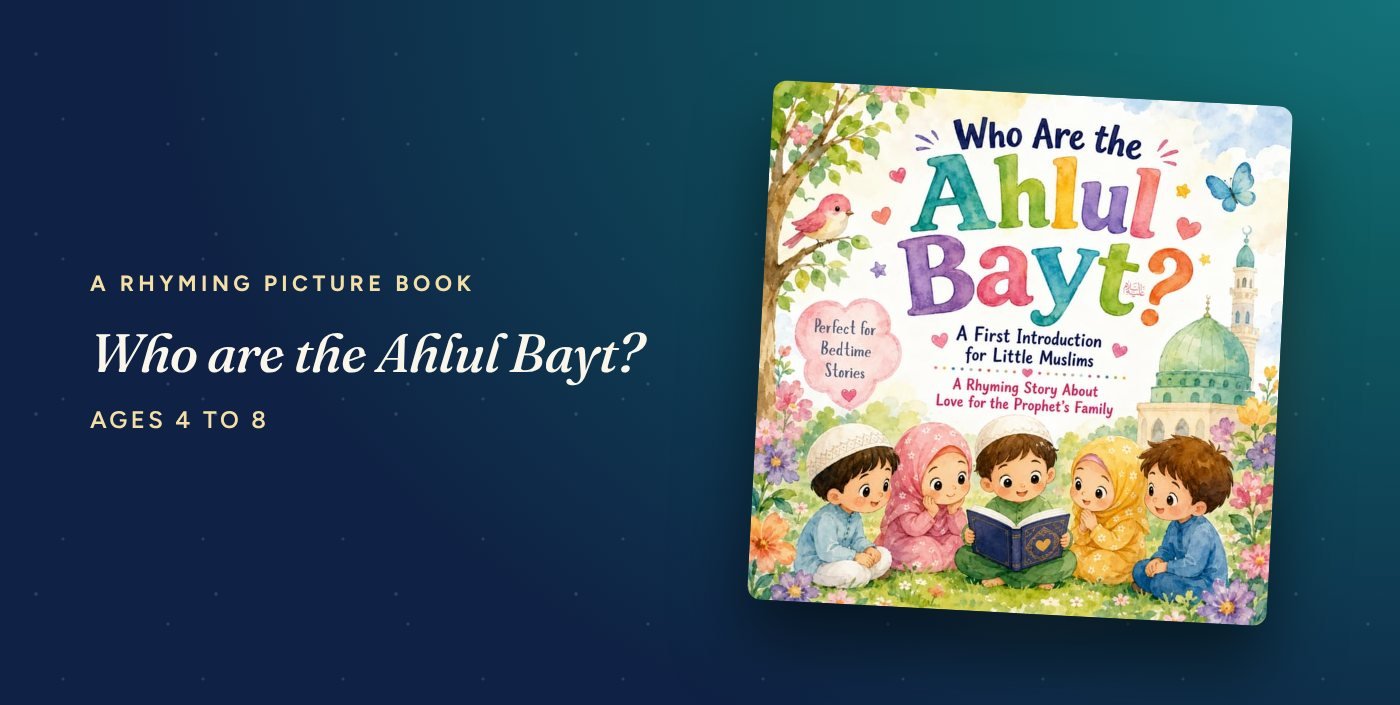
A four-year-old can tell you the name of every character in a favourite cartoon. Can they tell you the names of the family the Prophet (P.B.U.H) loved most?
That small question is why we wrote Who Are the Ahlul Bayt? (A.S): a gentle, rhyming picture book of 27 pages that introduces the Ahlul Bayt to children from the very first read-aloud. It does not try to teach everything. It tries to make a child love them, so the details have somewhere warm to land.
This guide takes you inside the book with real pages, explains why it is built the way it is, and shows how to read it so your child asks for it again tomorrow. (If you want a plain explanation for parents first, start with our guide to the Ahlul Bayt for parents.)
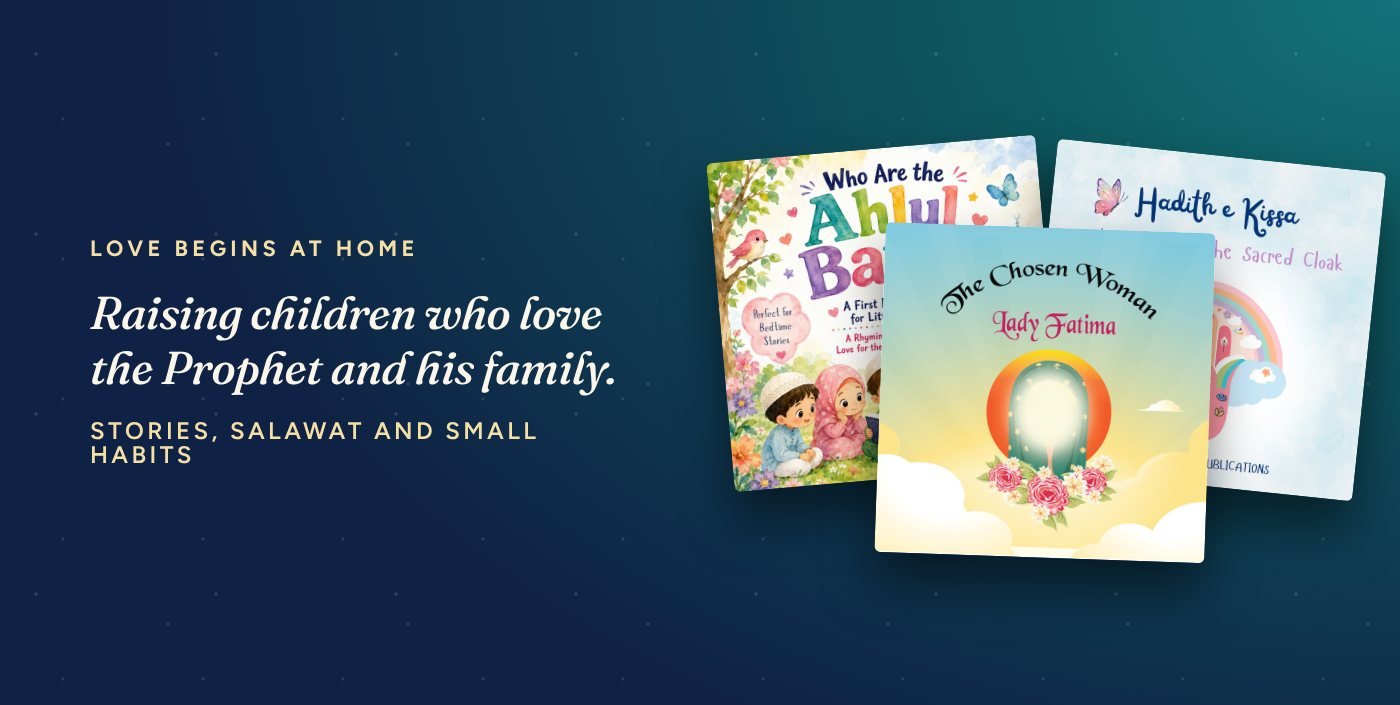
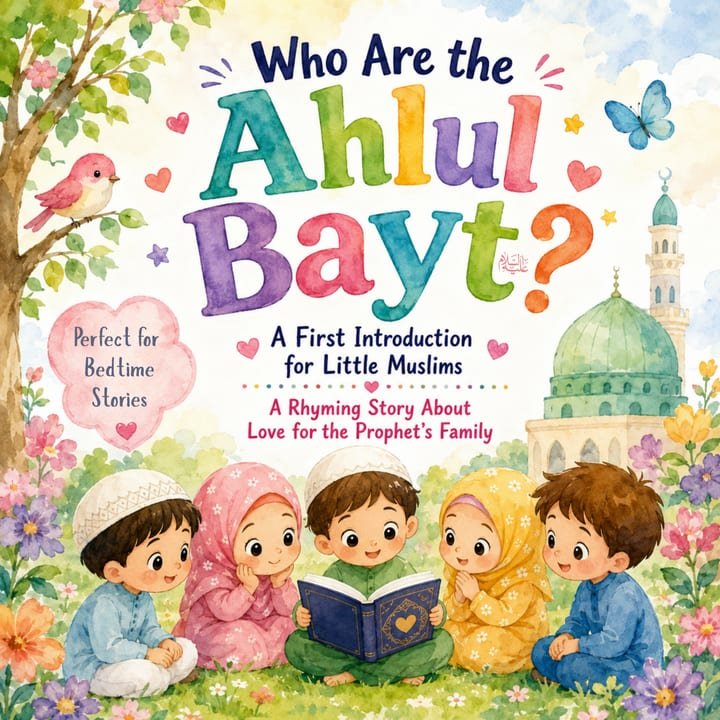 Who Are the Ahlul Bayt? (A.S)A First Introduction for Little Muslims · Ages 4–8
Why a rhyming picture book?
Children learn names and stories through rhythm long before they learn them through explanation. A rhyme is easy to say, easy to remember and easy to love. It also works as a lullaby: parents tell us they end up whispering the verses long after the book is closed.
So every page is four short lines, one idea, one picture. No long paragraphs, no heavy words, nothing a young child cannot carry in their head at bedtime.
It begins with the Cloak
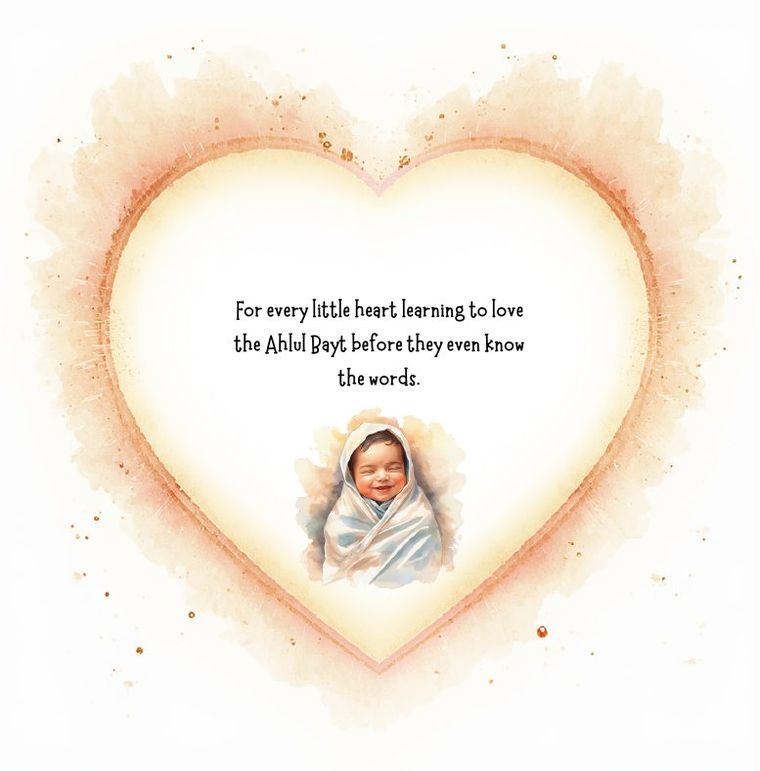
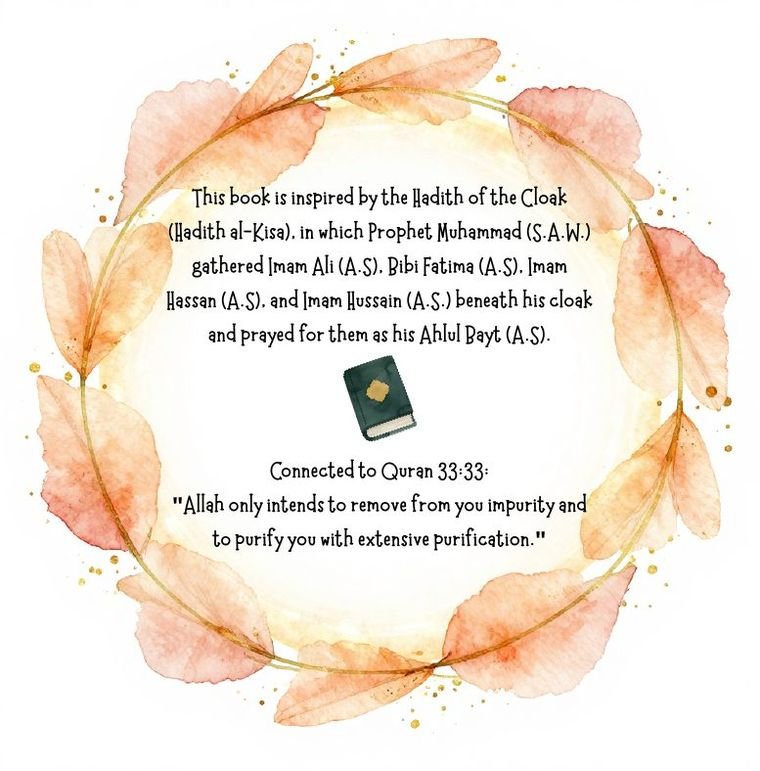
Before the first verse, the book tells parents where it comes from: Hadith al-Kisa, the Hadith of the Cloak. The Prophet gathered Imam Ali (A.S), Lady Fatima (S.A), Imam Hassan (A.S) and Imam Hussain (A.S) beneath his cloak and prayed for them as his Ahlul Bayt. It is why these five are known as the Panjetan Pak, the Five Pure Ones.
The book connects it to the Quran:
“Allah only intends to remove from you impurity, O people of the House, and to purify you with extensive purification.”
Quran, Al-Ahzab 33:33The verse the Hadith al-Kisa is connected with.
For older children, you can follow this with our story Hadith al-Kisa, which retells the event in more detail:
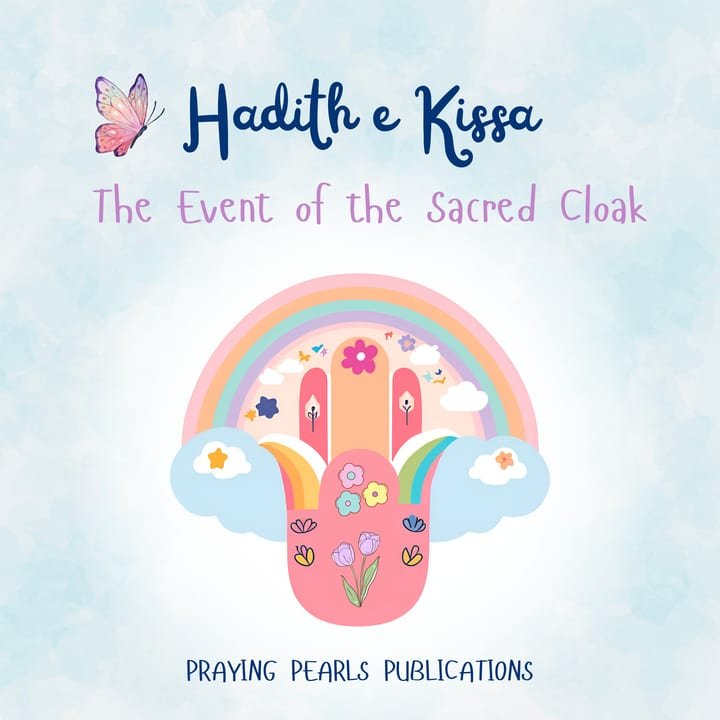 Hadith e KissaThe Event of the Sacred Cloak · Ages 4+
A walk through the book
A home filled with light
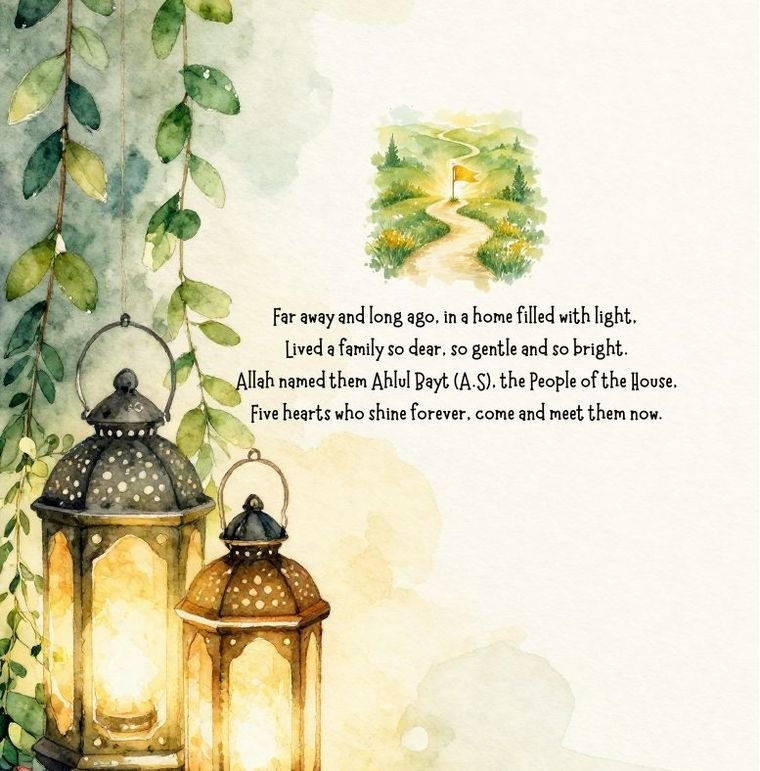
The story opens like a fairy tale, and a child instantly feels safe: “Far away and long ago, in a home filled with light, lived a family so dear, so gentle and so bright. Allah named them Ahlul Bayt, the People of the House.” Notice the choice. Before a child hears a single name, they hear that this is a family and a home.
The Prophet: kindness and prayer
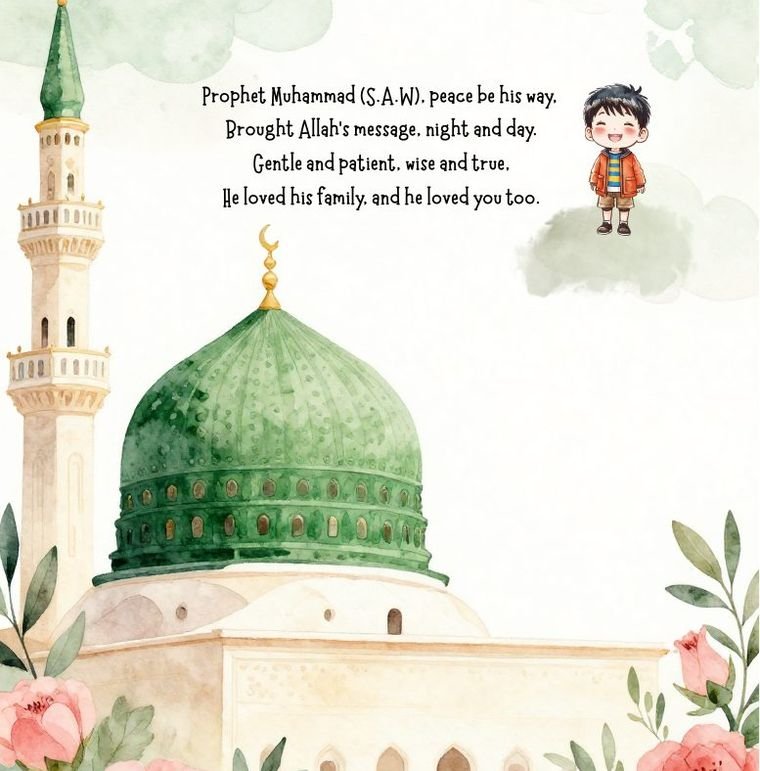
The first person we meet is the Prophet (P.B.U.H), in the lines “Gentle and patient, wise and true, he loved his family, and he loved you too.” The last four words are deliberate. We wanted every child to hear that the Prophet (P.B.U.H) loved them.
Lady Fatima (S.A): love, prayer and sharing
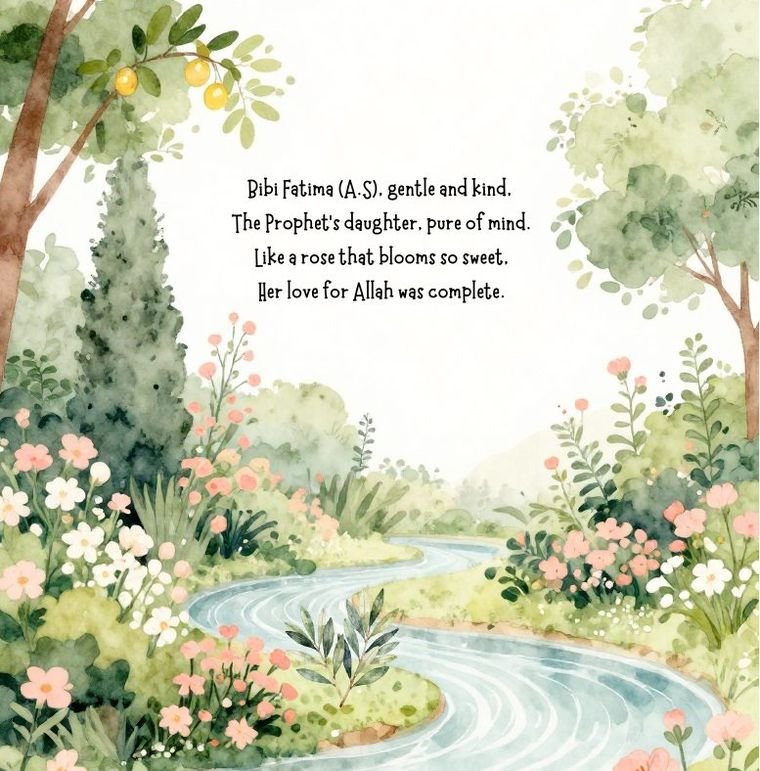
Lady Fatima (S.A) is shown through what children can copy: “She prayed at night when stars were bright, and shared her bread with all her might.” Prayer and generosity, in one rhyme.
Imam Ali (A.S): courage, prayer and justice
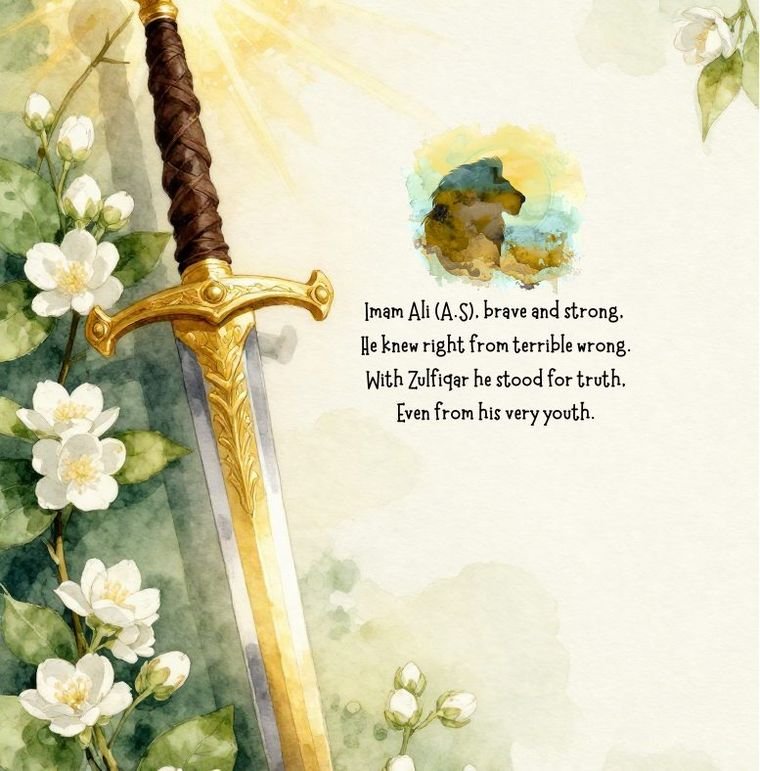
Imam Ali (A.S) is brave, but the book is careful to pair his strength with devotion: “He prayed each night till morning came, and never once forgot Allah’s name.” A child learns that true bravery sits beside prayer. You can follow this with:
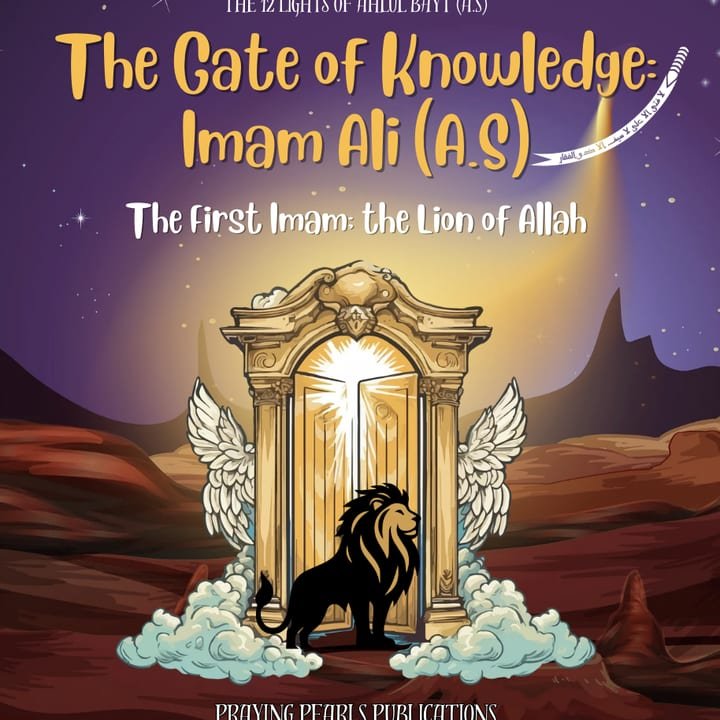 The Gate of KnowledgeImam Ali (A.S), the First Imam · Ages 7+
Imam Hassan (A.S): peace and forgiveness
Imam Hassan (A.S) shows a different kind of strength: “He chose forgiveness, chose to share, he chose a path of love and care.” It is a lovely page to read after a squabble between siblings, and the rhyme does the talking for you.
Imam Hussain (A.S): courage that still shines
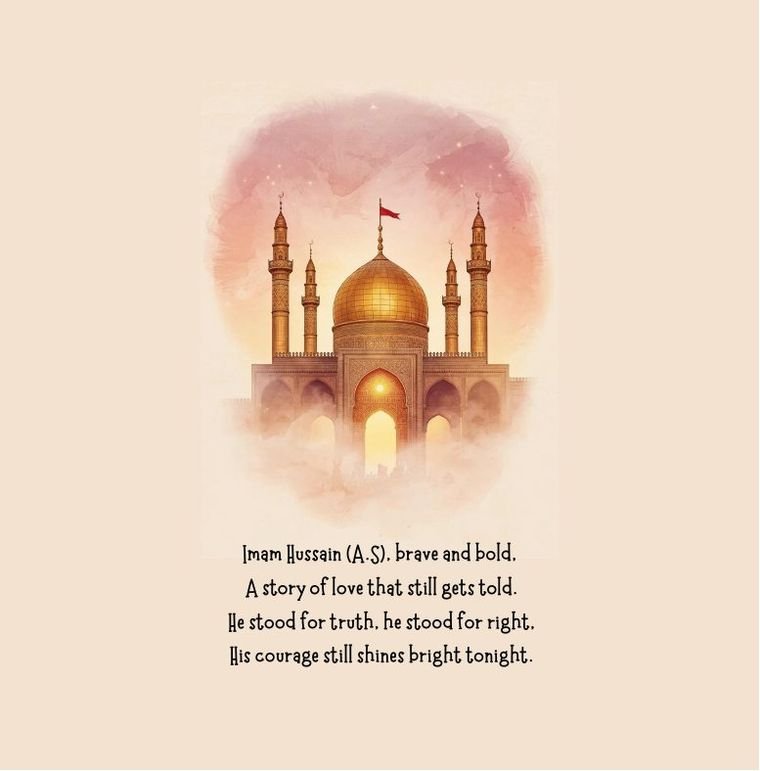
For Imam Hussain (A.S) the book keeps it short and tender: “He stood for truth, he stood for right, his courage still shines bright tonight.” It is a first introduction in a few lines, and it gives a four-year-old the heart of the message: standing for what is right is a light. When your child asks for more, you have the full story waiting.
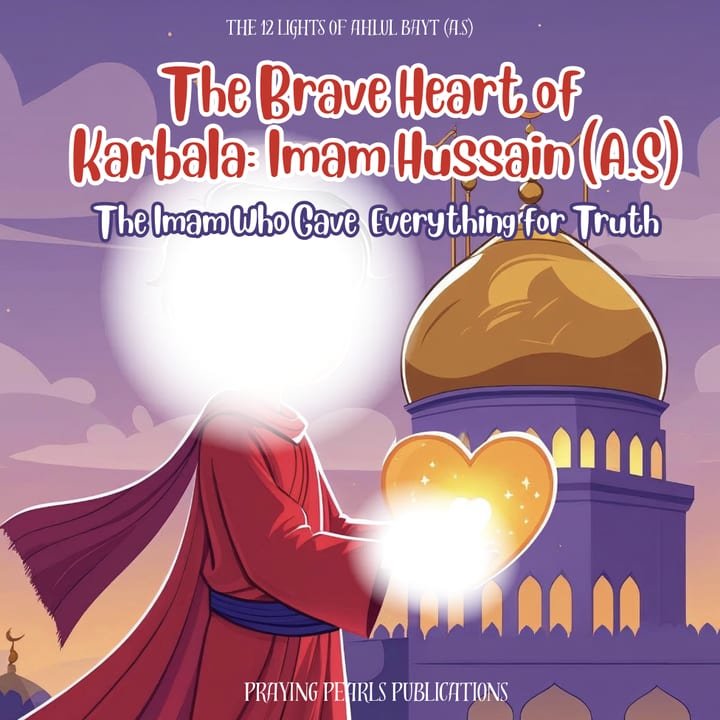 The Brave Heart of KarbalaImam Hussain (A.S), the Third Imam · Ages 4–10
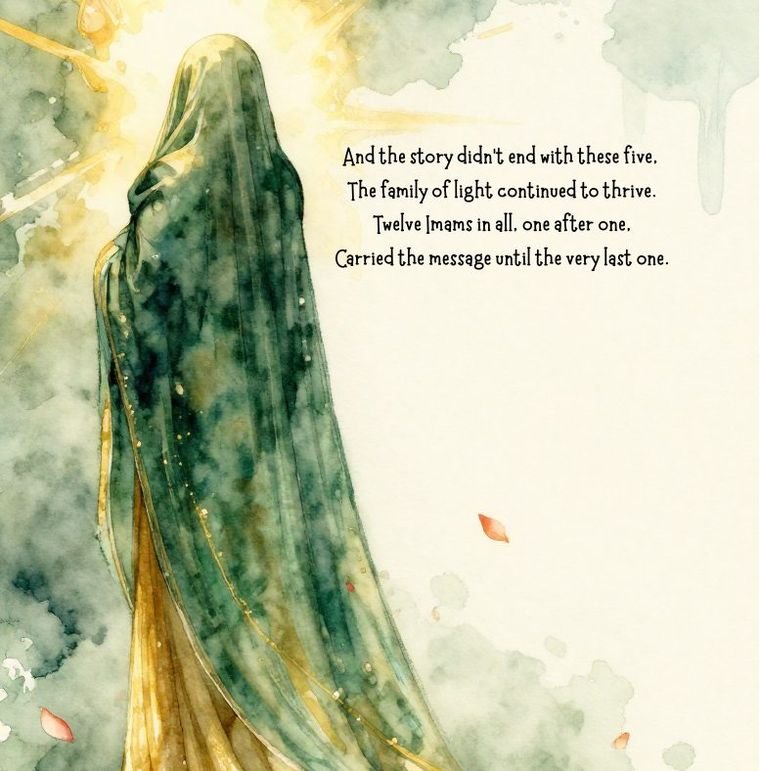
“And the story didn’t end with these five…”
Here the book opens a door: “The family of light continued to thrive. Twelve Imams in all, one after one, carried the message until the very last one.” Four pages then name the rest of the Imams, each with a single trait: patience, scholarship, justice, guarding the truth. A child does not need to memorise the order now. They just hear the names, with kindness attached.
The Awaited One
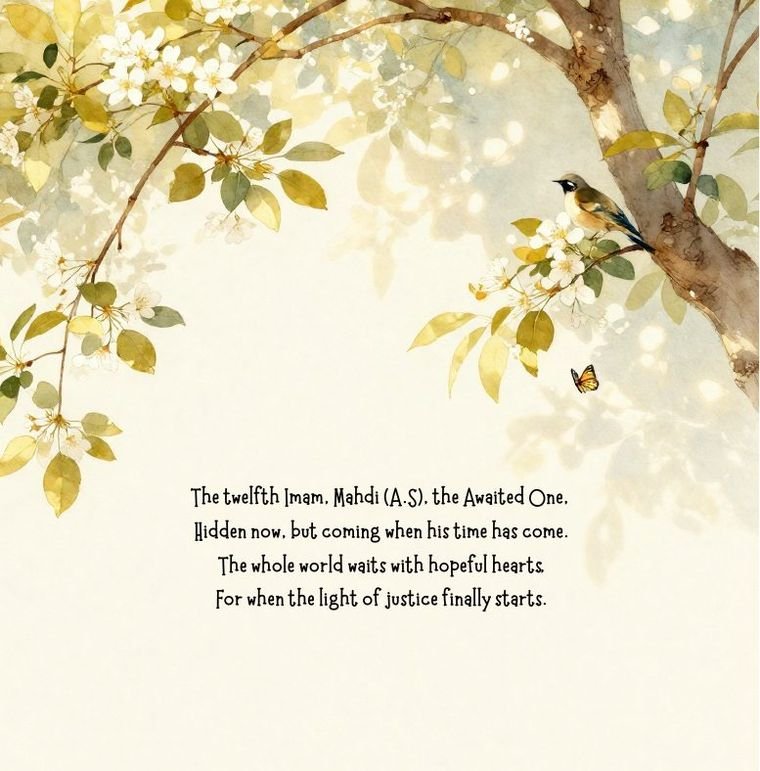
The book ends the Imams with a note of hope about Imam Mahdi (A.S): “Hidden now, but coming when his time has come. The whole world waits with hopeful hearts for when the light of justice finally starts.” Children understand waiting, and they understand hope.
Goodnight, little one
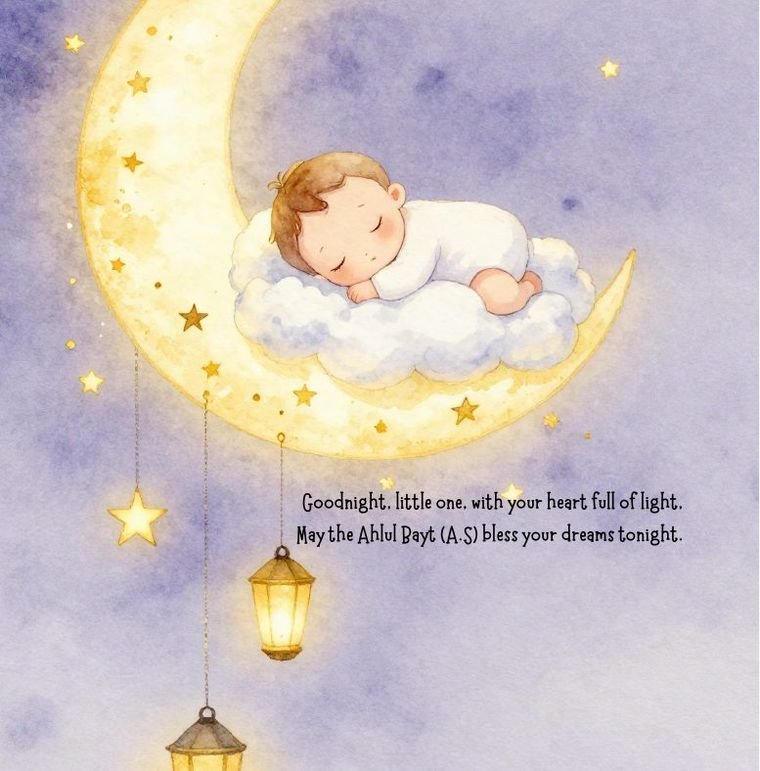
The last pages turn into a lullaby: “Goodnight, little one, with your heart full of light. May the Ahlul Bayt bless your dreams tonight.” It is meant to be read last, and quietly.
Why love for the Ahlul Bayt matters
If you are wondering why we begin here, there are three reasons, each rooted in the Quran and the Prophet’s (P.B.U.H) own words.
- The Quran asks for it. In the verse many Shia commentators read as referring to the Prophet’s (P.B.U.H) family, the Prophet is told to say: “I do not ask you for any payment for this, except love for [my] relatives.” (Ash-Shura 42:23).
- We pray for them every day. In Al-Ahzab 33:56, Allah and His angels send blessings on the Prophet (P.B.U.H), and we are asked to do the same. Our salawat includes “wa ali Muhammad”, the family of Muhammad.
- They are a guide. A hadith reported in both Sunni and Shia sources, known as the Hadith al-Thaqalayn, describes the Prophet (P.B.U.H) leaving behind the Book of Allah and his family. Scholars discuss its wording and meaning, so ask your own scholar if you want the detail.
A child does not need any of that on day one. They need to feel that these are people to love. The rest follows.
How to read it with your child
- Read it slowly, in the same place every night. The routine matters more than the speed.
- One or two pages a night. With 27 pages you can make it a two-week bedtime journey, finishing with the goodnight page.
- Let them finish the rhymes. Stop before the last word and see if they supply it.
- Say the honorific together. After every name, say “peace be upon them” or the salawat, so it becomes a habit. Our guide to teaching salawat shows how.
- Ask one small question. “Which one would you like to be like?” “What kind thing did Lady Fatima (S.A) do?” Do not test. Wonder together.
- Point to the pictures. The watercolours (a green dome, a sword, a shrine, a lantern) are anchors that help a child remember who is who.
Questions that work by age
- Ages 3 to 4: “Who is this?” “What is she doing?” “Can you find the moon?”
- Ages 5 to 6: “Why was Imam Hassan (A.S) a peacemaker?” “What do we do when we feel angry?”
- Ages 7 to 8: “Which Imam is next?” “How many Imams are there?” Let them read a page aloud and try to name the Panjetan Pak from memory.
What to read next
Once your child knows the family, give them the stories. Our one-Imam-a-month plan turns the Twelve Imams into a year of gentle learning, and our guide to teaching the Panjetan Pak goes deeper into the five. For Muharram, start with Imam Hussain (A.S) for a 5-year-old.
A note from us
We are not scholars. We are two friends who love the Ahlul Bayt and are trying to do our little part, as best we can, to serve them. If you find a mistake in this book, in a name, a spelling or a line, please tell us through the contact page. We will check it with knowledgeable people and correct it in the next edition. Your guidance is part of this service.
Frequently asked questions
What is “Who Are the Ahlul Bayt? (A.S)” about?
It is a rhyming picture book that introduces the Ahlul Bayt: the Prophet Muhammad (P.B.U.H), Imam Ali (A.S), Lady Fatima (S.A), Imam Hassan (A.S) and Imam Hussain (A.S), then the Twelve Imams, ending with the Awaited Imam Mahdi (A.S). Each person gets a short, gentle verse and a watercolour page.
What age is it for?
It is written for ages 4 to 8. Toddlers enjoy the rhythm and pictures, and older children can read the verses themselves and begin asking questions.
Does it include Karbala?
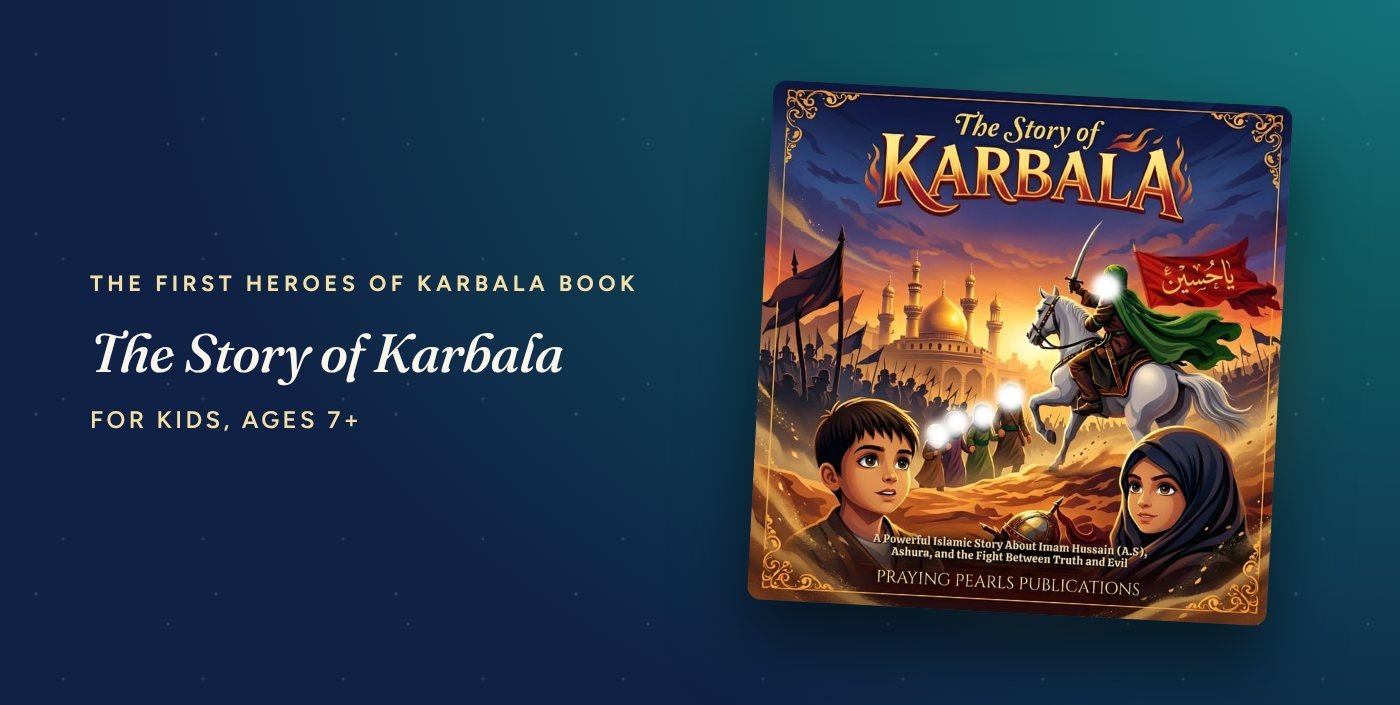
It mentions Imam Hussain’s (A.S) courage and sacrifice in a few gentle lines, as a first introduction. For the full story of Karbala, read The Story of Karbala for Kids when your child is ready.
What is Hadith al-Kisa and why does the book start with it?
Hadith al-Kisa (the Hadith of the Cloak) describes the Prophet (P.B.U.H) gathering Imam Ali (A.S), Lady Fatima (S.A), Imam Hassan (A.S) and Imam Hussain (A.S) under his cloak and praying for them as his Ahlul Bayt. It is connected to Quran 33:33, and it is the reason these five are known as the Panjetan Pak.
How should I read it with my child?
Read it slowly, one pair of pages a night, and let your child finish the rhymes. Say each name with the honorific. End with the goodnight page and a short salawat. See the tips in this guide.
What should we read after this book?
The 12 Lights of Ahlul Bayt series gives each Imam his own picture book, and the Hadith al-Kisa book retells the Cloak in more detail for children. See the book links in this guide.
We found a mistake. What should we do?
Please tell us. We are not scholars, only servants of the Ahlul Bayt doing our little part. We will check it with knowledgeable people and correct the next edition. Use our contact page.