For Parents
How to Help Your Child Love the Prophet (P.B.U.H) and His Family
The Prophet Muhammad (P.B.U.H) and his family are the heart of our faith, yet many children grow up knowing their names without really feeling their warmth. We want more for them. We want our children to love the Prophet (P.B.U.H) the way we love someone who has taken care of us, and to know the Ahlul Bayt as people who were kind, brave and close to Allah.
Love does not come from memorising facts. It comes from stories, from daily small rituals, and from seeing how much we love them ourselves. This guide gives you a practical way to build that, step by step.
Start with the Prophet (P.B.U.H) as a mercy
Begin with who he was: the one Allah sent as a mercy.
“And We have not sent you, [O Muhammad], except as a mercy to the worlds.”
Quran, Al-Anbiya 21:107
Tell children what that mercy looked like. In many reports, he was gentle with children, greeted them first, and shared their games and their joy. He carried his grandsons Hassan and Hussain on his shoulders, and it is narrated that he lengthened his prostration so as not to disturb a grandchild who had climbed onto his back. He stood to welcome his daughter Fatima when she entered a room.
When children hear that the Prophet (P.B.U.H) noticed them, they begin to feel noticed by him. That is the start of love.
Introduce the family as a family
Children understand family before they understand history. Present the Ahlul Bayt as a household:
- The Prophet Muhammad (P.B.U.H): the beloved grandfather and Messenger.
- Lady Fatima (S.A), his daughter: loving, generous and strong, the mother of the Imams. “She gave away her food to a hungry guest.”
- Imam Ali (A.S): the Prophet’s (P.B.U.H) cousin and son-in-law, brave, wise and just, the Gate of Knowledge.
- Imam Hassan (A.S) and Imam Hussain (A.S): the Prophet’s (P.B.U.H) grandsons, “the leaders of the youth of Paradise.”
These five are known as the Panjetan Pak, the Five Pure Ones. Our story of the cloak, Hadith-e-Kissa, tells how the Prophet (P.B.U.H) gathered them under his cloak. It is one of the most tender stories you can tell a young child.
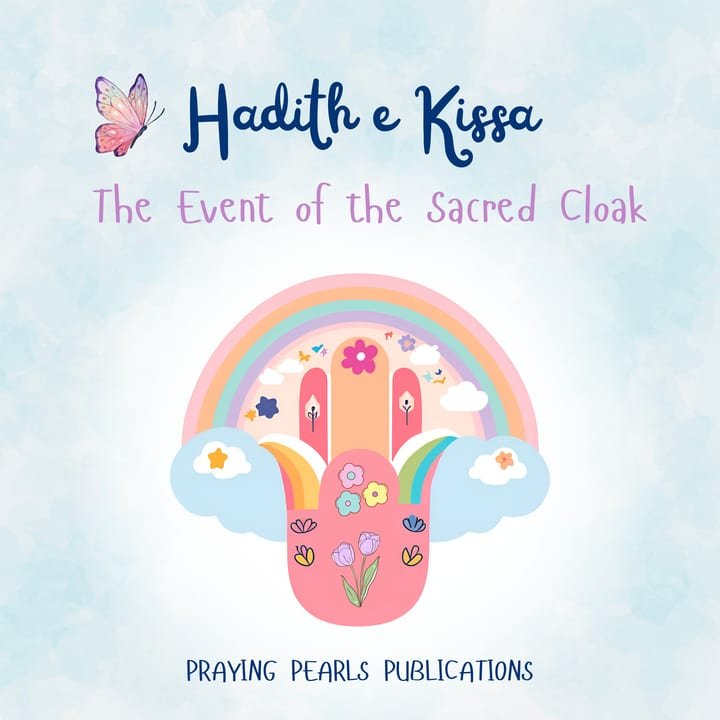 Hadith e KissaThe Event of the Sacred Cloak · the sacred cloak, told for children · Ages 4+
 Lady Fatima (A.S)Islamic Book for Kids: Love of Prophet Muhammad (S) and Lady Fatima (A.S) · the story of the chosen woman · Ages 5–18
For older children, add the Quranic dimension: the verse of purification (33:33) and the call to love the Prophet’s (P.B.U.H) near relatives (42:23). Many families also teach the famous words of the Prophet that he left behind “the Book of Allah and my family” as two things to hold on to. Simply say, “He told us to keep close to both.”
Make salawat a daily habit
The Quran invites believers to send blessings on the Prophet (P.B.U.H).
“Indeed, Allah and His angels send blessings upon the Prophet (P.B.U.H). O you who have believed, ask [Allah to confer] blessing upon him and ask [Allah to grant him] peace.”
Quran, Al-Ahzab 33:56
Make it simple and daily:
- Say “Allahumma salli ala Muhammad wa aali Muhammad” together after the morning dua.
- Say it each time you mention their names. Children copy what they hear, so say it warmly every time.
- Teach it as a gift: “We are sending love back to the people who loved us first.”
Tell stories, not lectures
Stories carry love. Choose short, real, human moments:
- Imam Ali (A.S) the brave and kind, who carried food through the night to the poor.
- Lady Fatima (S.A) the generous, who gave what she had even when she needed it herself.
- Imam Hassan (A.S) the gentle, known for patience and giving, even to those who were unkind.
- Imam Hussain (A.S) the brave, who stood for truth when it was hard.
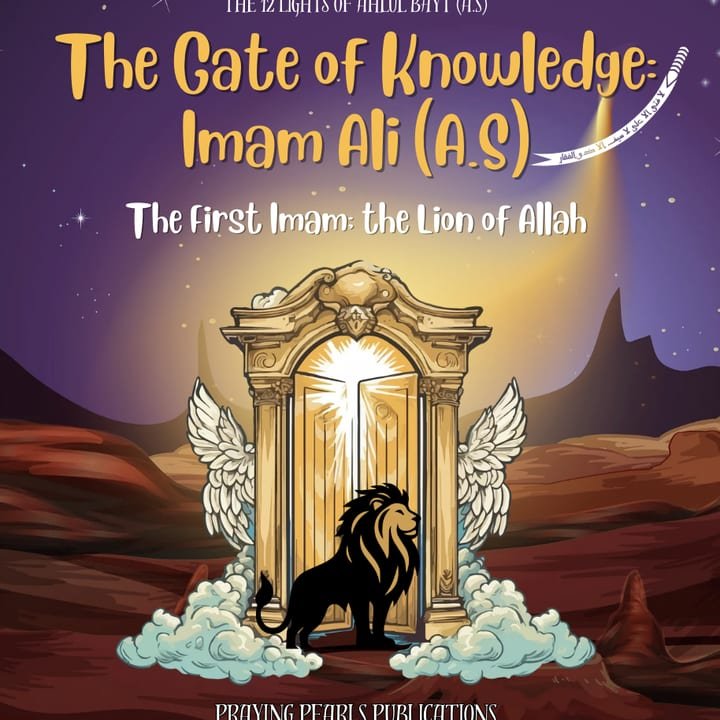 The Gate of KnowledgeImam Ali (A.S), the First Imam · volume one of the 12 Lights · Ages 7+
End each story with a question that connects it to your child’s day: “When could you be gentle like Imam Hassan (A.S)?” “How can we help someone like Lady Fatima (S.A) did?”
Let the calendar do the teaching
The blessed days of the Prophet’s (P.B.U.H) family give you a reason to talk about each of them, all year round. A few ideas:
- Birthdays and special occasions: bake something sweet, share a story, give to charity in their name.
- Eid-e-Ghadeer: celebrate the day the Prophet (P.B.U.H) announced Imam Ali’s (A.S) leadership with a family meal and our free Eid-e-Ghadeer colouring book.
- Eid-e-Zahra: a joyful day for children, with our free Eid-e-Zahra colouring pages.
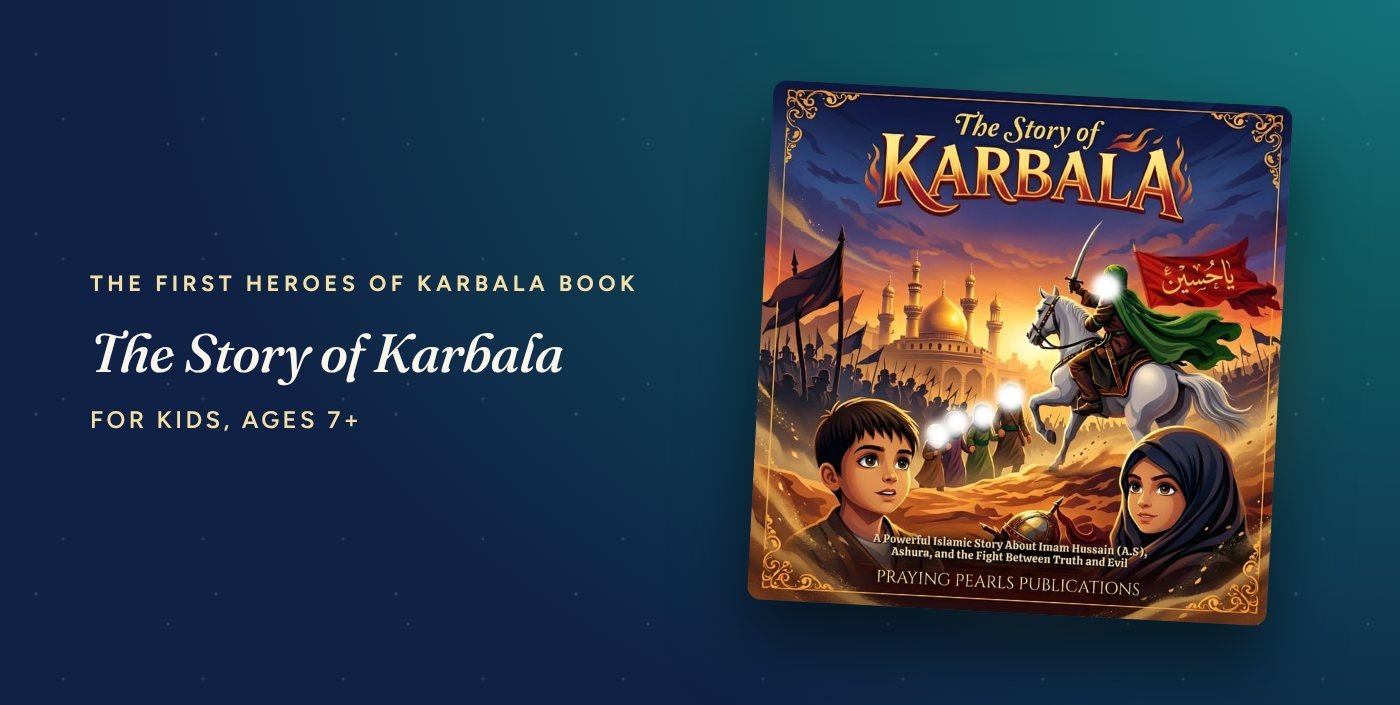
- Muharram: introduce the stories of Karbala gently and by age. See how to explain Karbala to a child, and our free ebook The Story of Karbala for Kids.
- One Imam a month: follow our family plan to meet the Twelve Imams.
Four small habits that make love stick
- Say the names with respect, every time. Children notice tone as much as words.
- Keep pictures and books in sight. A shelf of Ahlul Bayt books at child height turns curiosity into reading.
- Link their virtues to your child’s world. Patience at the dinner table, honesty at school, courage when something is unfair.
- Share your own love. Tell your child why you love them. “I felt calm when I first learned about Lady Fatima (S.A).”
What this looks like by age
Ages 2 to 5
Rhymes, picture books and names. Say salawat together and tell very short stories: “Imam Hussain (A.S) loved his grandfather very much.”
Ages 6 to 9
Short biographies, one Imam at a time, plus activities like colouring and card-making. Introduce Karbala gently.
Ages 10 to 14
Meaning and role models. Ask why they chose what they chose, and connect it to choices your child makes. Let them argue back. Questions are how faith becomes theirs.
Teens
Honest conversation and room to explore. Offer reading that speaks to their heart, such as Allah Is Near, and share why the Ahlul Bayt matter to you.
What to avoid
- Turning love into pressure. “If you loved them you would…” pushes children away.
- Disrespect towards others. Love for the Ahlul Bayt should make children kinder, not harsher.
- Frightening them with Karbala. Start with love and courage, add the sorrow slowly.
- Skipping their questions. A question is a sign of interest. Welcome it.
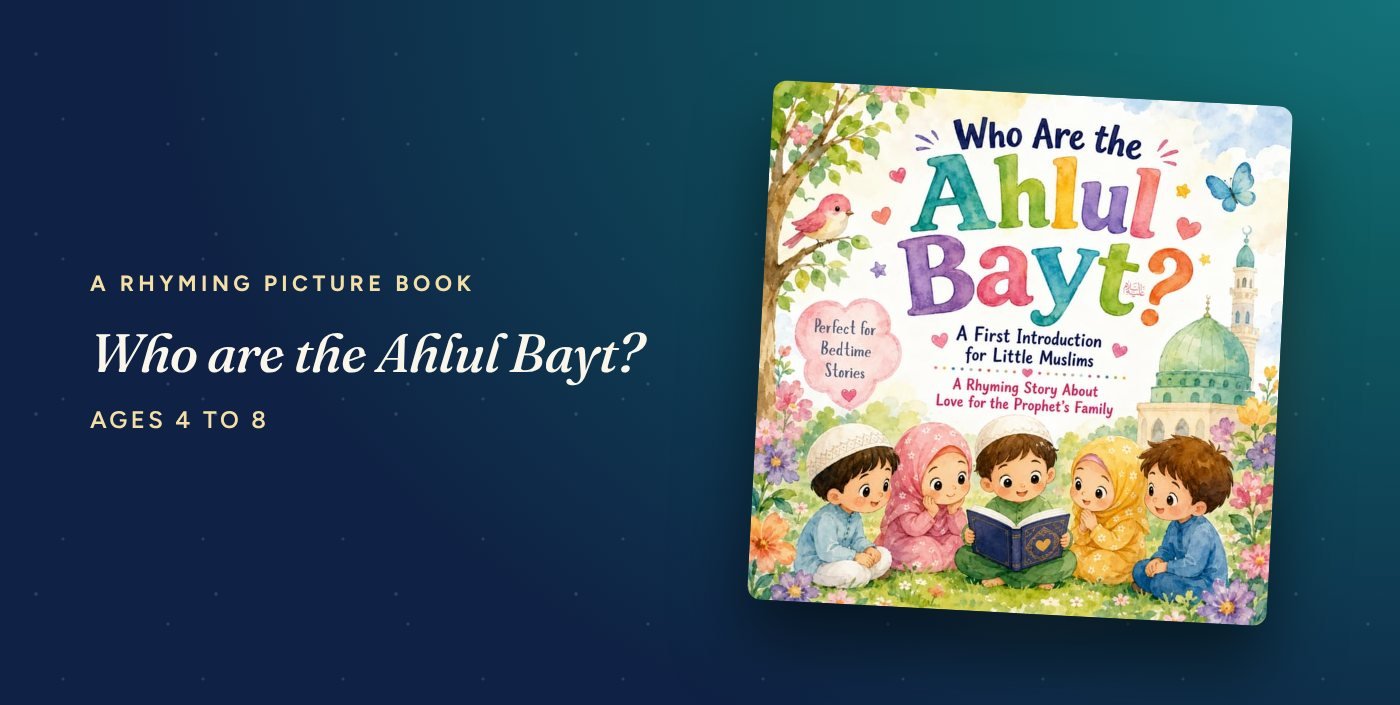
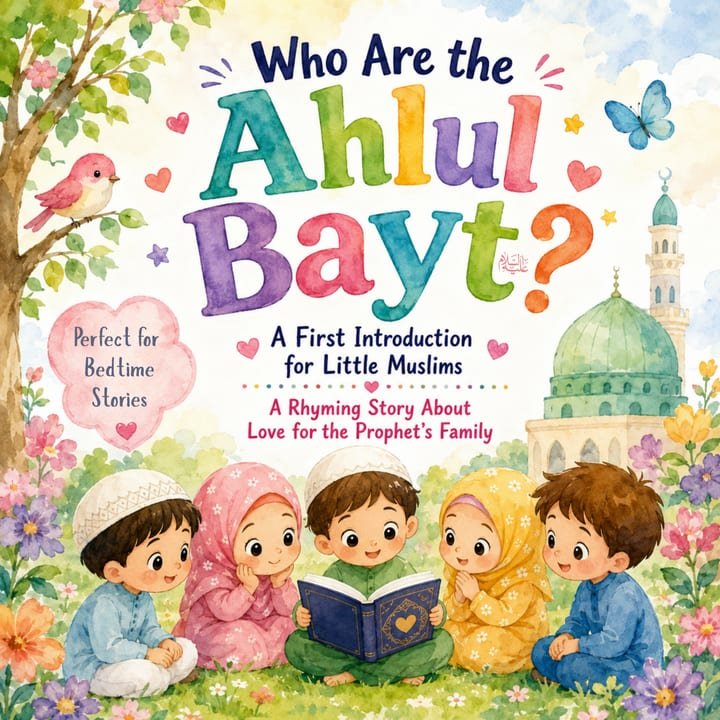 Who Are the Ahlul Bayt? (A.S)A First Introduction for Little Muslims · a first introduction for little Muslims · Ages 4–8
For the foundation of all of this, read how to help your child fall in love with Allah.
Common questions
How do I explain who the Ahlul Bayt are to a young child?
Say they are the Prophet’s (P.B.U.H) own family, chosen and purified by Allah (Quran 33:33). Start with the Panjetan Pak, the five: the Prophet, Imam Ali (A.S), Lady Fatima (S.A), Imam Hassan (A.S) and Imam Hussain (A.S). Our guide, Who Are the Ahlul Bayt?, has age-by-age wording.
What is salawat and how do children say it?
Salawat is asking Allah to send blessings on the Prophet (P.B.U.H) and his family. The common form is “Allahumma salli ala Muhammad wa aali Muhammad.” Children can say it after hearing their names, before bed, or when something good happens.
How can I teach love for the Ahlul Bayt without making Karbala frightening?
Begin with their kindness, bravery and love, long before the hard parts. When you reach Karbala, tell it by age and focus on courage and standing for truth. See How to Explain Karbala to a Child Without Frightening Them.
What are good family traditions for the blessed days?
Pick one small ritual for each: a story at bedtime, a simple dessert, a colouring page, a dua, and a charity gesture. Our free Eid-e-Ghadeer and Eid-e-Zahra colouring books are made for exactly this.
What if my child is exposed to different views of the Prophet’s (P.B.U.H) family?
Teach love and good manners first. Children can love the Ahlul Bayt wholeheartedly and still be kind and respectful to everyone. Encourage questions at home so they never have to go elsewhere to find answers.