For Parents
How to Help Your Child Fall in Love with Allah
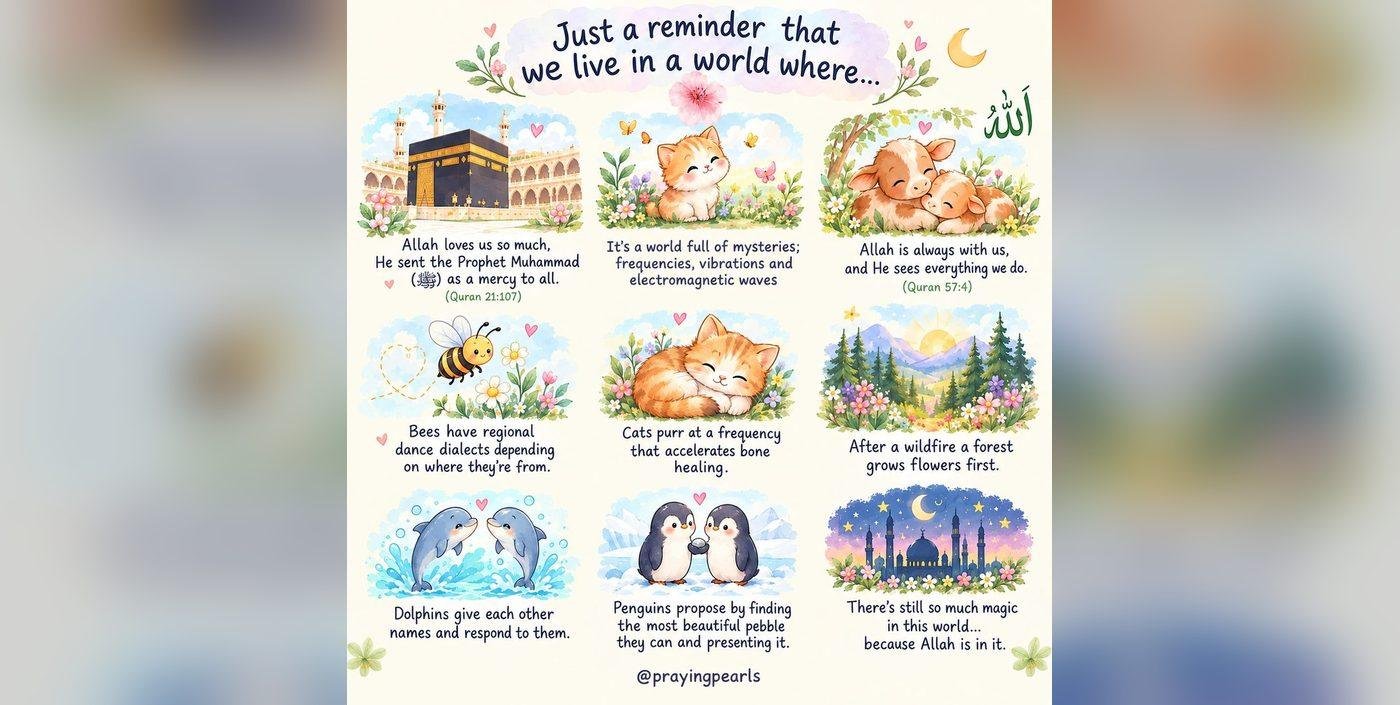
Most of us were taught about Allah long before we were taught to love Him. We learned what is allowed and what is not, what we must do and what we must avoid. We want something different for our children. We want them to feel, deep down, that Allah is close, kind and on their side.
That feeling is not taught in a single lesson. It is built in small moments, the way a child comes to love anyone: through being noticed, thanked, forgiven and held. This guide gives you a practical way to do that, from toddler to teen.
Why love has to come first
A child who obeys out of fear learns to hide mistakes. A child who obeys out of love learns to come back after them. Those are two very different adults.
The Quran does not open with threats. It opens every chapter but one with “In the name of Allah, the Most Gracious, the Most Merciful.” Allah describes Himself as near, responsive and forgiving. When we introduce Him to children the same way, we are following His own example.
“And when My servants ask you concerning Me, indeed I am near.”
Quran, Al-Baqarah 2:186
Start there. A child who knows Allah is near will bring Him everything: the scraped knee, the bad dream, the secret worry. That is the whole goal.
Start with wonder: His signs are everywhere
Young children are natural scientists. They stop to watch ants, collect stones and ask why the moon follows the car. This curiosity is the doorway to Allah. The Quran invites us again and again to look: at the sky, at the bee, at the camel, at ourselves.
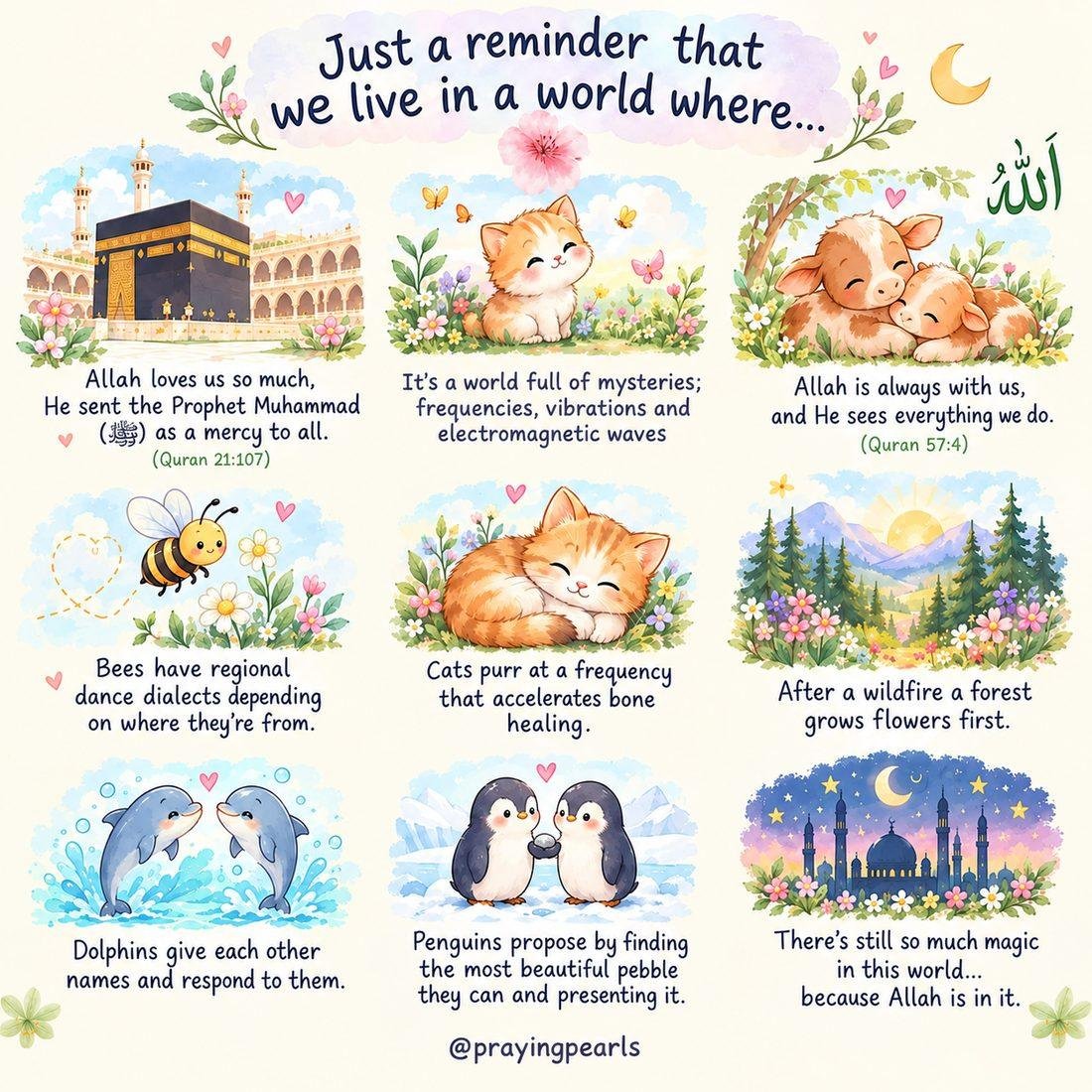
Make it a habit rather than an event:
- Name the Maker out loud. “Look at this tiny flower. Allah designed every petal.” Say it lightly, as an observation, not a lecture.
- Ask “I wonder how…” questions. How does a seed know which way is up? How does a bee find its way home? Let the question hang. Wonder is more powerful than a quick answer.
- Notice what children are noticing. If they are fascinated by dolphins, stars or bees, follow them there. Allah is in all of it. See our guide to Allah’s signs in the honeybee’s eye and your own for a ready-made family activity.
- Keep an “Allah made this” jar. Whenever someone spots something amazing, write it on a slip and drop it in. Read them out at the end of the week.
Teach gratitude as a daily habit
Gratitude is the shortest road to love. We love the people who give us good things, and children are quick to see that everything good in their lives was given. The trick is to make the giving visible.
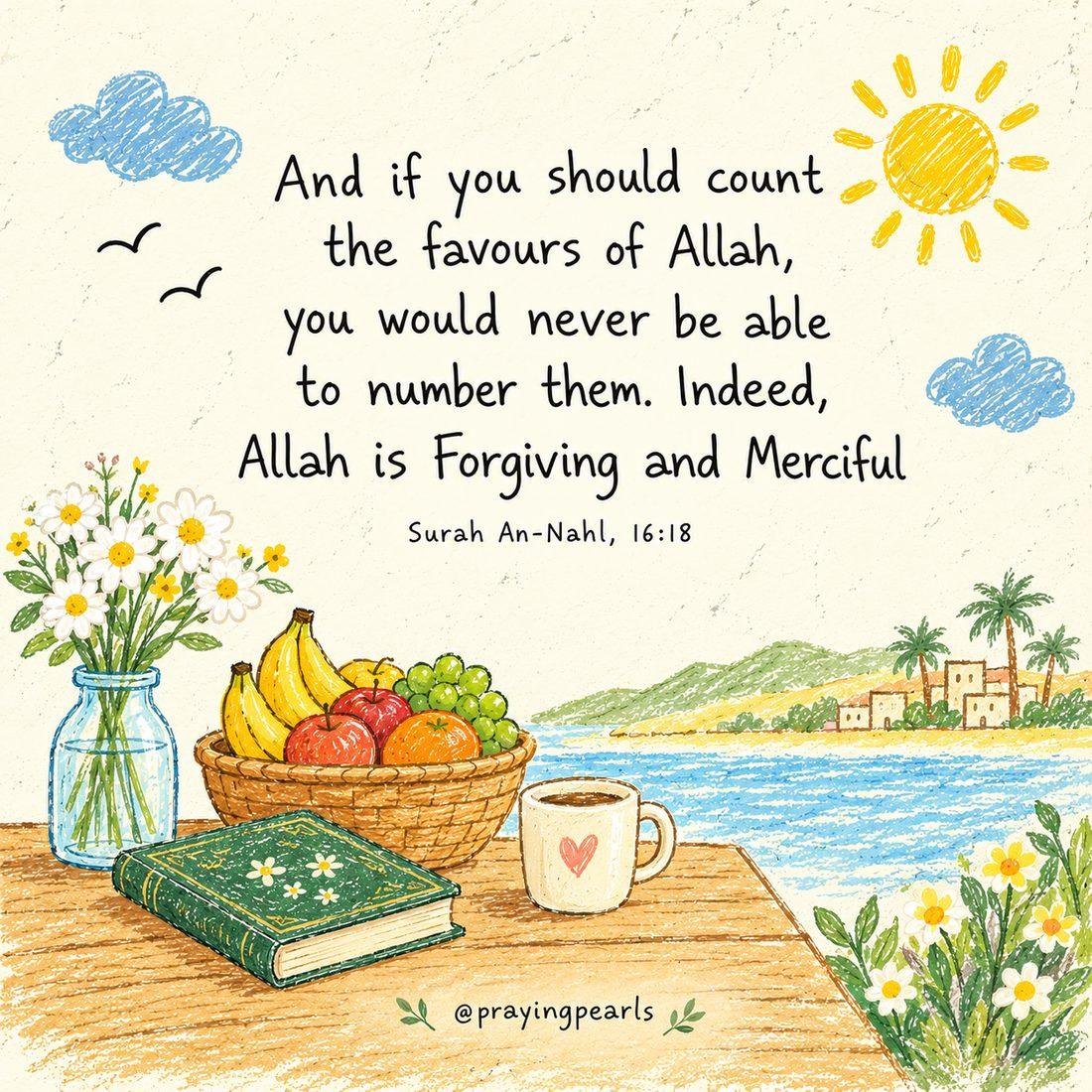
“And if you should count the favours of Allah, you would never be able to number them. Indeed, Allah is Forgiving and Merciful.”
Quran, An-Nahl 16:18
Three ways to build it in:
- Three thank-yous at bedtime. Each person says three things from the day and ends with “Alhamdulillah.” Small things count most: “the warm bath,” “Grandma’s phone call.”
- Thank Allah before you thank the person. “Alhamdulillah, Baba made dinner.” Then thank Baba. The child learns that people are His means of giving.
- Open your eyes on the way home. Count the colours, the people who helped you, the things that worked. “That is a favour. How many can we find?”
 When I’m Happy, I Thank AllahIslamic Books for Kids (Talking to Allah) · a gentle book of gratitude · Ages 3–10
Let them feel His mercy through yours
Children learn what Allah is like by what we are like. If a mistake at home brings anger and silence, they will expect the same from Allah. If it brings a calm talk, an apology and a hug, they will expect forgiveness from Him.
- Repair out loud. “I shouted, and I’m sorry. I’m going to ask Allah to help me be calmer.” Children who watch parents make tawbah (return) learn that it is safe.
- Separate the act from the child. “That was an unkind thing to do. You are a kind person, so let’s fix it.”
- Teach a short istighfar. “Astaghfirullah” after a mistake, followed by one action to put it right.
- Tell the story of mercy. Allah describes Himself as more merciful than anyone we know. A beloved narration compares His mercy to a mother’s love for her child, and says His is greater still.
When your child is older, and especially if you or they are carrying guilt, the book Allah Forgives You was written for exactly this moment. Read our guide to feeling too far gone.
Teach them that ease comes with hardship
Every child will face disappointment: a friend moves away, a test goes badly, someone they love falls ill. How they understand Allah in those moments will shape their faith for decades.
Resist the urge to say “it’s all for the best” too quickly. Start by sitting with the feeling. Then, when they are ready, offer three truths:
- Allah hears you. “You can tell Him exactly how you feel.” Prophet Yaqub (A.S) said, “I only complain of my suffering and my grief to Allah” (Quran 12:86).
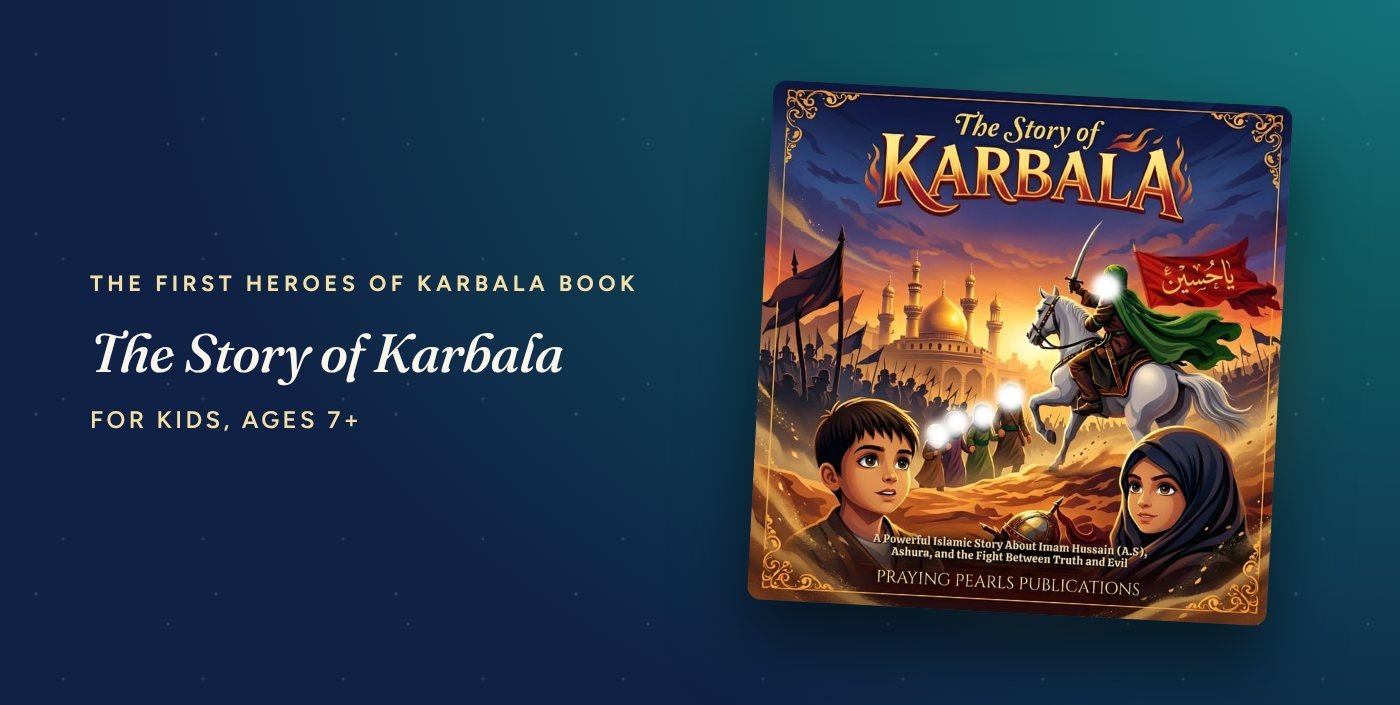
- Hard things are not signs He is angry. The people closest to Allah faced some of the hardest tests. Karbala is the clearest example, and children can meet it gently through stories like The Story of Karbala for Kids.
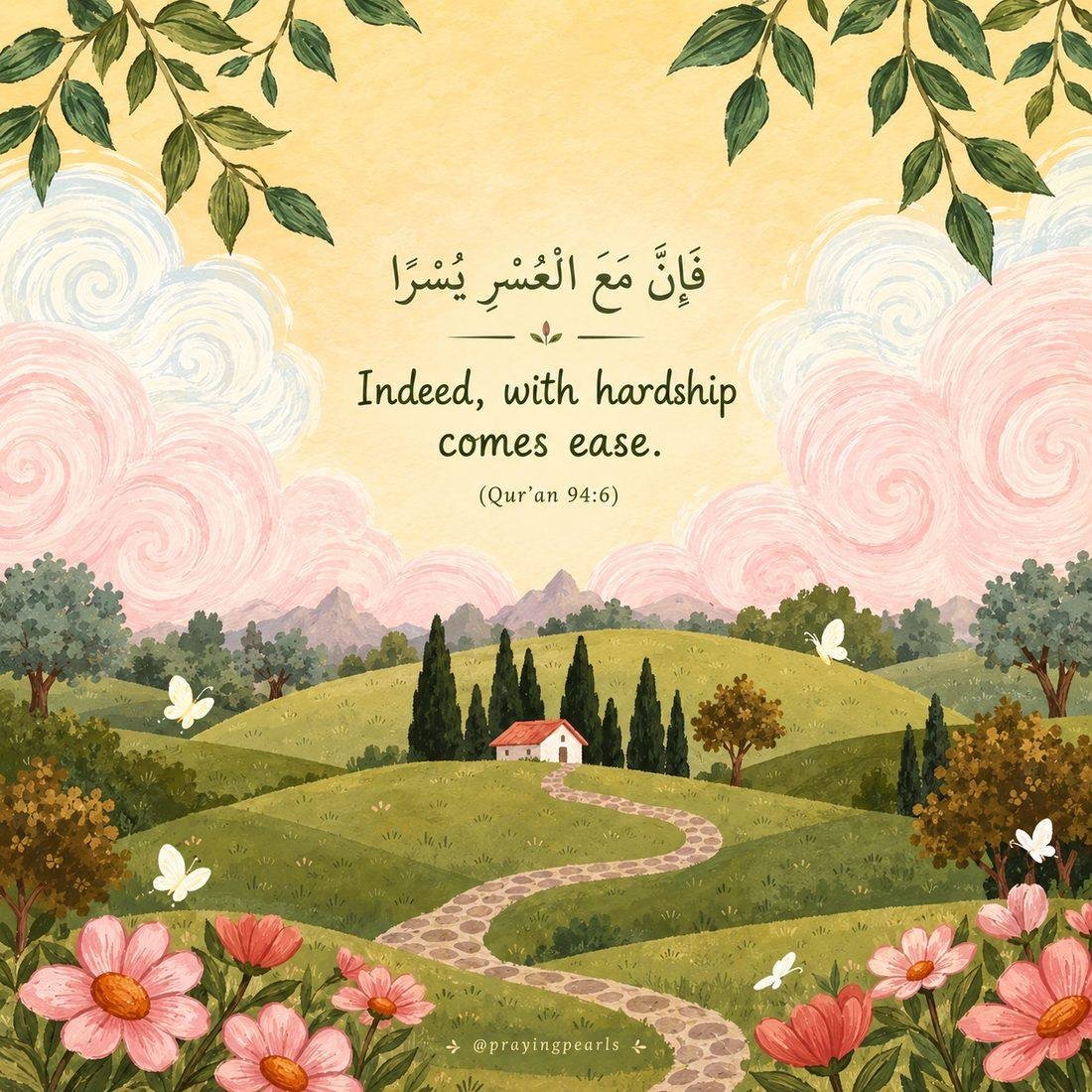
- Ease is already on its way. “Indeed, with hardship comes ease” (94:6). Ask, “What is one small good thing we can see even today?”
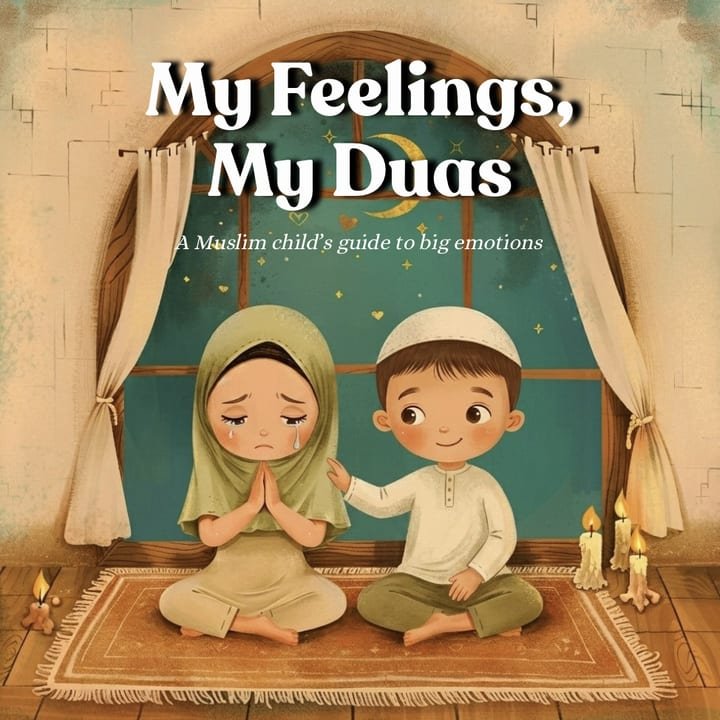 My Feelings, My DuasA Muslim Child’s Guide to Big Emotions · duas for big feelings · Ages 5–9
Help them talk to Allah in their own words
Memorised duas matter, and so does a child’s own voice. Give them both.
- Short, repeatable duas. Before eating, before sleeping, after waking. Say them together until they are theirs.
- Free conversation. “Do you want to tell Allah about your day?” Let them speak in any language, however simple.
- A quiet corner. A prayer mat, a cushion and a soft light make a space they will want to visit.
- Names that feel like friends. Learn one name of Allah a week: Ar-Rahman (the Most Merciful), Al-Wadud (the Loving), As-Sami (the All-Hearing). See how to teach the 99 Names one at a time.
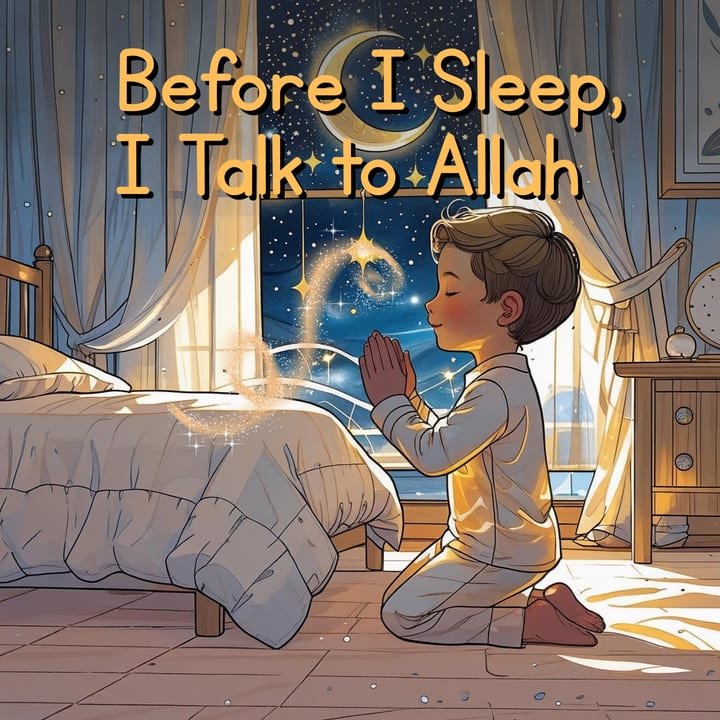 Before I Sleep, I Talk to AllahA Bedtime Book of Gratitude and Prayers · a bedtime book of talking to Allah
Let them see you love Him
Children copy what we do far more than what we say. They notice if our eyes soften when we pray, if we say Alhamdulillah when the news is good, and if we reach for Allah when it is bad.
- Pray where they can see you, and invite them to join without pressure.
- Say aloud what you are thankful for.
- Talk about your own dua being answered, and your own patience when it is not yet.
- Let them see you open the Quran, even briefly.
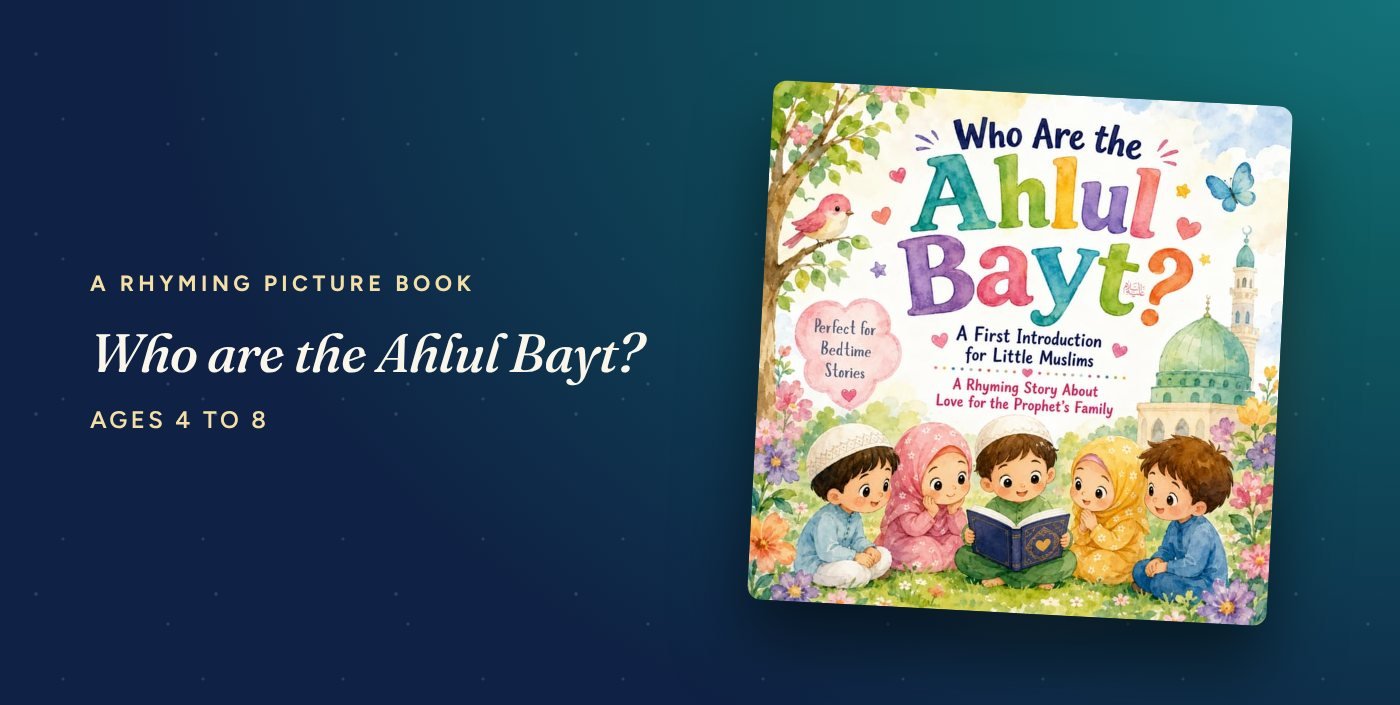
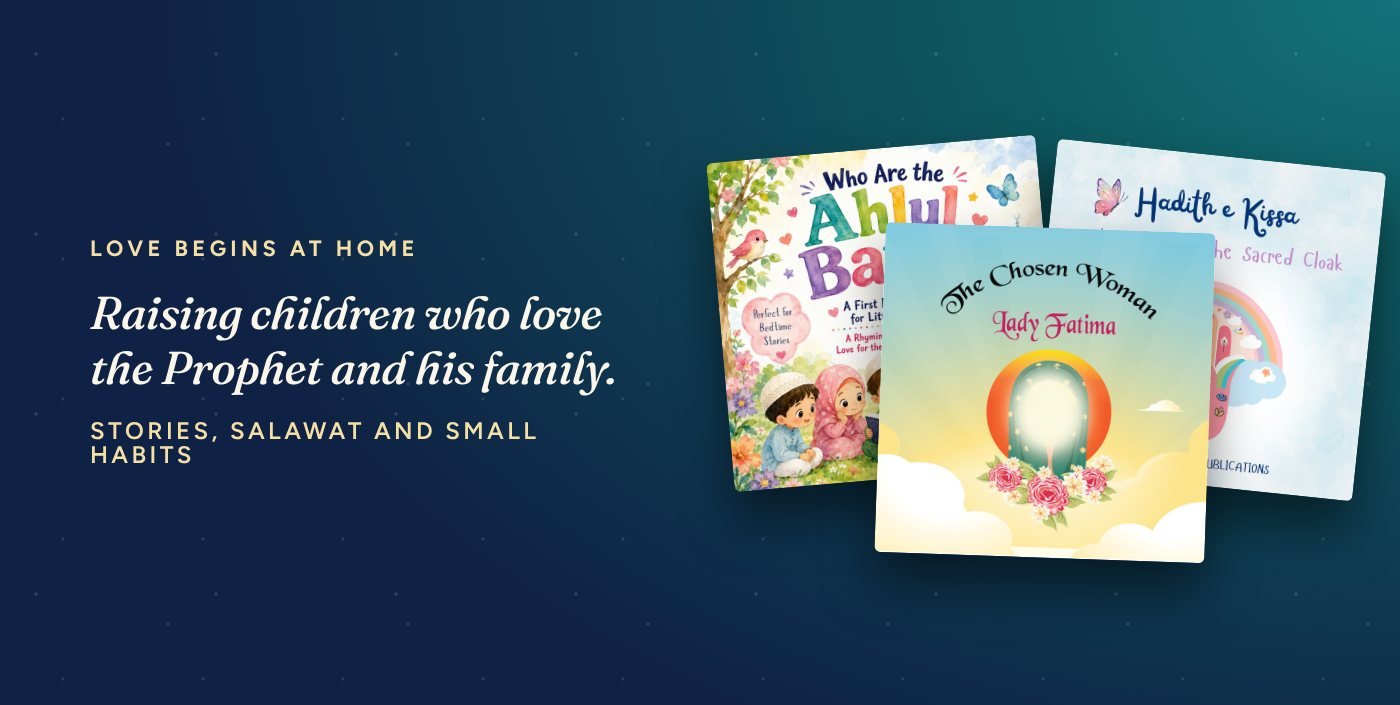
Love for Allah grows beside love for His Messenger and the Messenger’s family, whom He chose to guide us. For that part of the journey, read how to help your child love the Prophet (P.B.U.H) and his family.
What this looks like by age
Ages 2 to 4
Sensory and repetitive. Bismillah before food, Alhamdulillah after, a short bedtime dua, and “Allah made this” on every walk. Keep it joyful.
Ages 5 to 8
Stories, questions and gratitude lists. Introduce names of Allah and simple duas. Ask “What would you like to tell Allah today?” and then listen.
Ages 9 to 12
Meaning and choice. Explain the “why” behind prayer, introduce the Prophet’s (P.B.U.H) family as role models, and make space for hard questions. Let them lead a dua at the table.
Teens
Honesty and independence. Share your own struggles and what has helped. Offer reading that speaks to their heart. A book like Allah Is Near can be a gentle companion when they feel anxious or alone.
A seven-day starter plan
- Day 1: Find one sign of Allah on a walk and name it together.
- Day 2: Start the three-thank-yous habit at bedtime.
- Day 3: Learn one name of Allah and its meaning.
- Day 4: Make a mistake on purpose, in a small way, and model an apology and istighfar.
- Day 5: Read a story about the Prophet’s (P.B.U.H) family together.
- Day 6: Write or draw a letter to Allah. Keep it somewhere safe.
- Day 7: Share what each person noticed this week. Say Alhamdulillah.
What to avoid
- Using Allah as a threat. “Allah will be angry with you” teaches fear of Him, and a child who is afraid keeps secrets.
- Turning prayer into a battle. Short and warm beats long and forced.
- Dismissing questions. “Because I said so” is a closed door. “Great question, let’s find out together” is an open one.
- Pretending to be perfect. Your honesty about struggle is the most credible faith lesson they will ever see.
Common questions
Should I teach my child to fear Allah?
Reverence matters, but for young children the foundation should be love and trust. The Quran introduces Allah as the Most Merciful again and again, and His mercy is described as encompassing all things (Quran 7:156). Respect and accountability can grow later, on top of a secure sense that Allah loves them.
At what age can I start talking to my child about Allah?
From the first year, through the way you say Bismillah and Alhamdulillah. By ages three to four, children enjoy short rhymes and simple dua. By seven, they can handle bigger questions and the meanings of Allah’s names.
My child asks “Where is Allah?” What do I say?
A gentle, true answer is that Allah is not a body in one place. He is always with us and knows us, and the Quran says He is closer to us than our jugular vein (Quran 50:16). Then connect it to something they can feel: “He hears you when you whisper to Him.”
What if my child is not interested in prayer?
Keep the experience warm and short. Let them choose a dua, sit beside you, or say thank you for three things at bedtime. Interest follows connection. Pressure and shame usually push it away.
Which books help children love Allah?
For ages three to eight, Before I Sleep, I Talk to Allah, When I’m Happy, I Thank Allah and 99 Names of Allah for Kids are written for exactly this: warmth, gratitude and a close relationship with Allah.