For Parents
The Story of Karbala for Kids: A Gentle, Honest Telling for Ages 7+
Every Shia parent meets the same moment sooner or later. Muharram arrives, a child sees the black clothes and the tears, and asks: “Why is everyone sad? What happened to Imam Hussain (A.S)?”
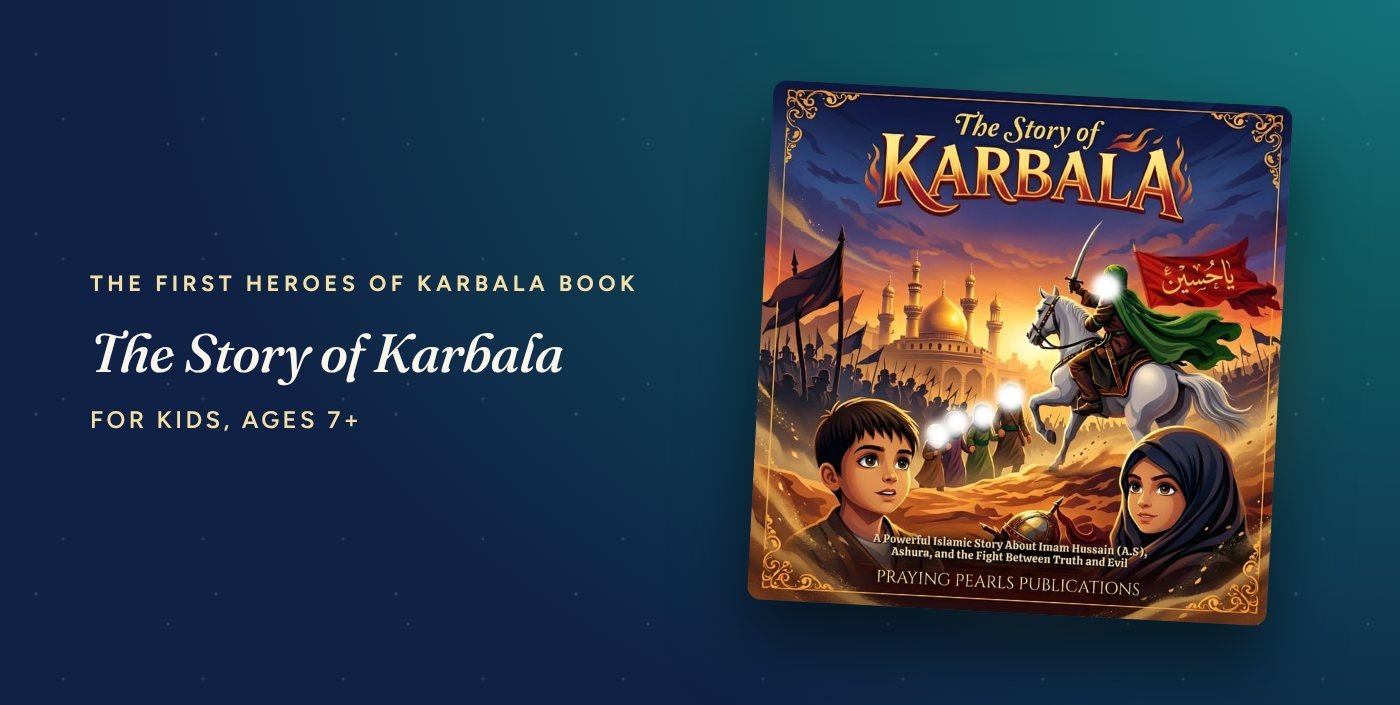
We wrote The Story of Karbala for Kids for that moment. It is the first book in our Heroes of Karbala series, a short, honest and gentle telling for children from age seven. This guide shows you what is inside, with real pages, and how to read it together without frightening a child.
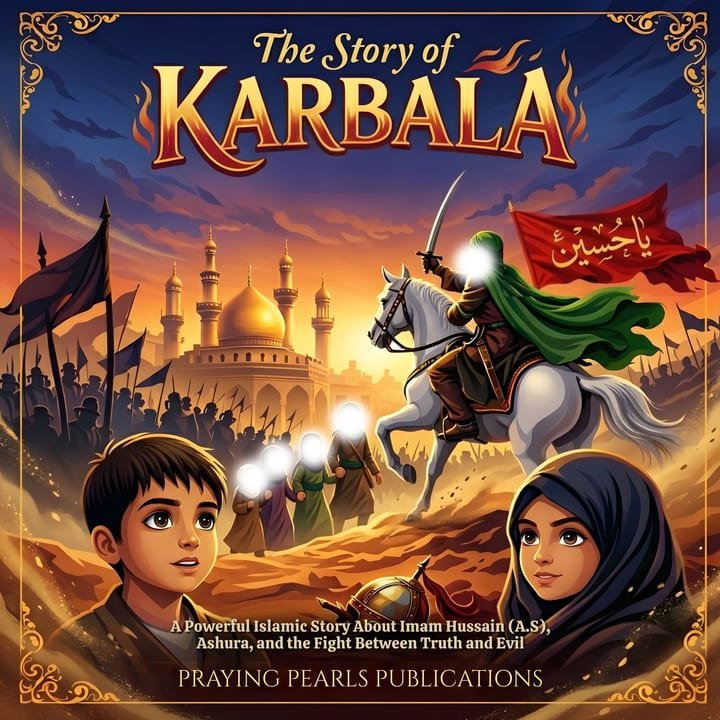 The Story of Karbala for KidsA Powerful Introduction to Imam Hussain (A.S), Ashura, and the Heroes of Truth · Ages 7–14
Why we wrote it this way
Our letter to parents at the front of the book says what we hope for. We want to:
- Inspire bravery and sacrifice, showing that courage comes in many forms and that standing up for what is right is a noble act.
- Highlight the importance of faith, the way Imam Hussain (A.S) and his companions trusted Allah at every step.
- Encourage compassion and justice, and the value of kindness and standing up for truth.
In other words, the book is not only about what happened. It is about what a child can become when they know it.
The story, page by page
The book is 48 pages and every page is one idea in two or three short sentences. That is deliberate: a seven-year-old can take in one thought at a time, and a parent can stop at any page when the child needs to pause.
Who Imam Hussain (A.S) was, and why he refused
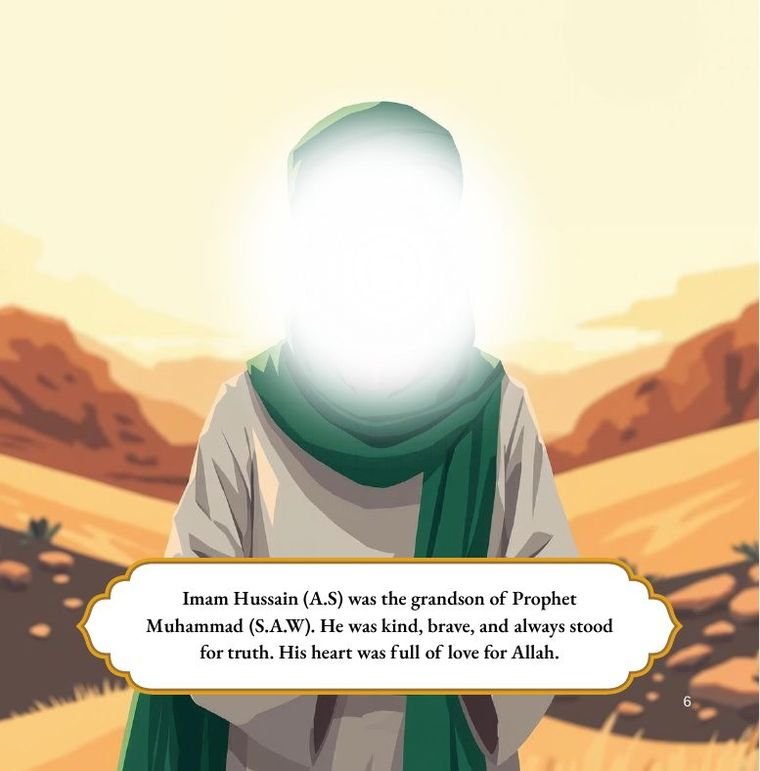
It begins with love, not battle: “Imam Hussain (A.S) was the grandson of Prophet Muhammad (P.B.U.H). He was kind, brave, and always stood for truth. His heart was full of love for Allah.” Then the problem: a ruler, Yazid, who wanted people to follow him even if it meant doing wrong. Imam Hussain (A.S), as the book puts it, refused to accept injustice.
The letters from Kufa and Muslim ibn Aqeel
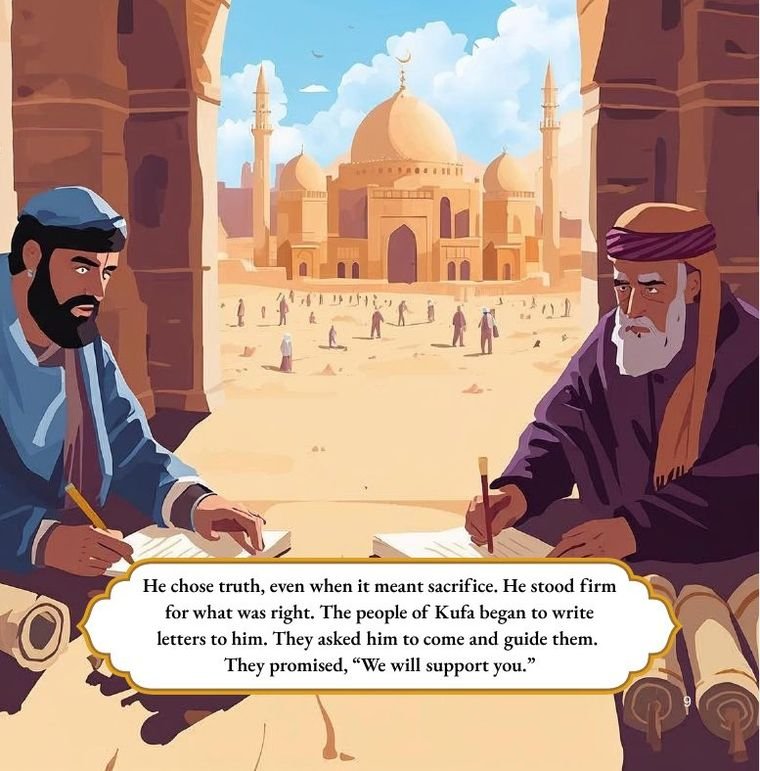
The people of Kufa wrote and asked him to come and guide them, and promised to support him. Imam Hussain (A.S) sent his cousin Muslim ibn Aqeel first, “as a messenger of truth”. At first many welcomed him. Then fear entered their hearts, and one by one they turned away, and Muslim ibn Aqeel was left alone. The book says simply that he stayed brave and stood for truth until his last breath.
Surrounded, and the thirst
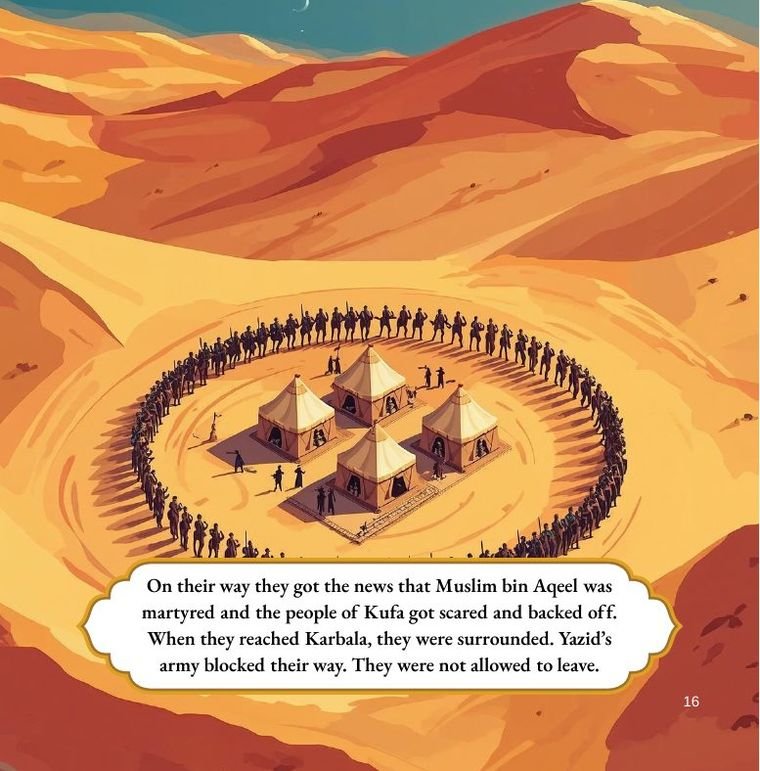
When the family reached Karbala they were surrounded. Then the river was closed to them, and “even little children were left without water”. The book tells it with restraint: three days without water, children crying softly “Al-atash, al-atash” (“the thirst, the thirst”), and Imam Hussain (A.S) feeling every cry in his heart.
The night of Ashura
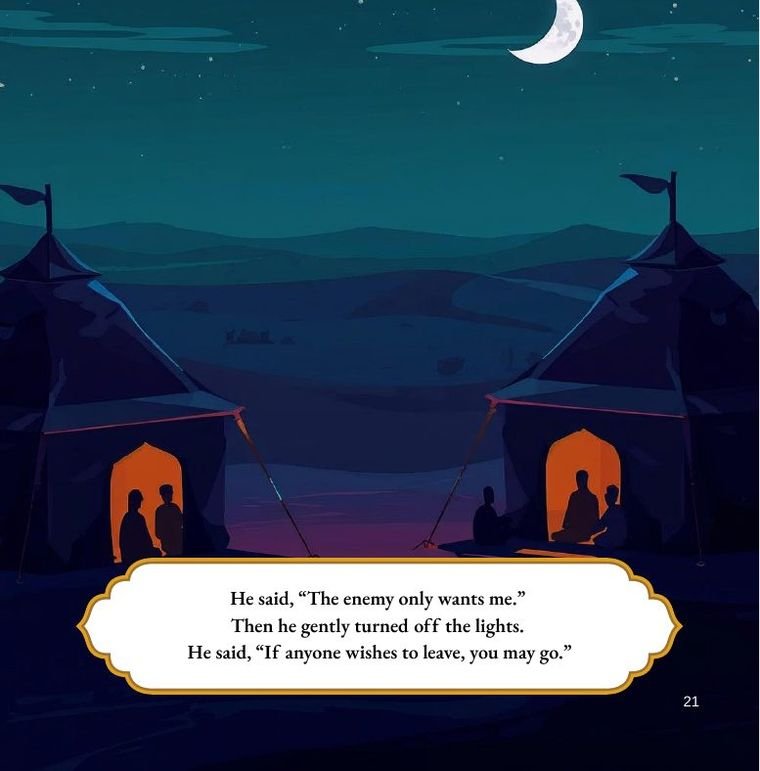
This is the page parents often tell us they read twice. On the night before Ashura, Imam Hussain (A.S) gathered everyone close and said the enemy only wanted him. He gently turned off the lights and told them that anyone who wished to leave could go. And no one left.
The heroes who stayed
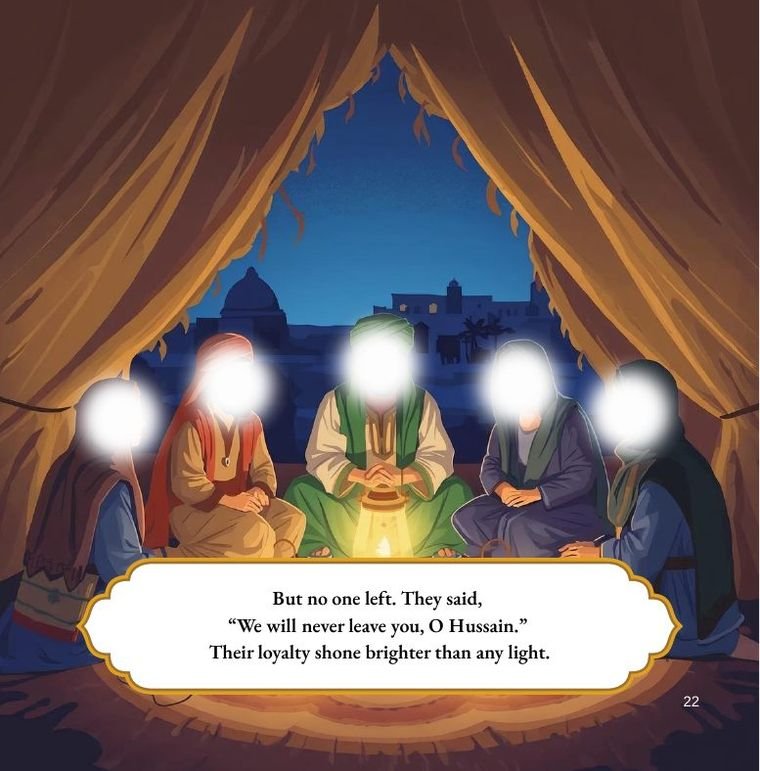
The book then names the ones who stood with him: the companions; Hazrat Abbas (A.S), who went to bring water for the children; Ali Akbar, who looked so much like the Prophet (P.B.U.H); Aun and Muhammad (A.S), the young sons of Bibi Zainab (S.A); and Ali Asghar, the youngest. We name them here with care because each of them has their own book in the series, and a child can come back to meet them one by one.
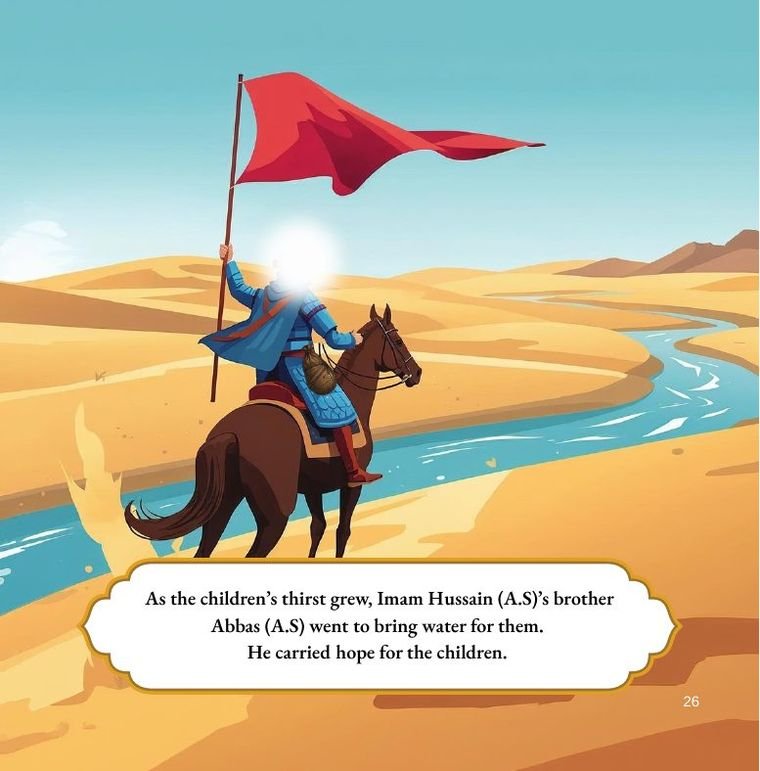
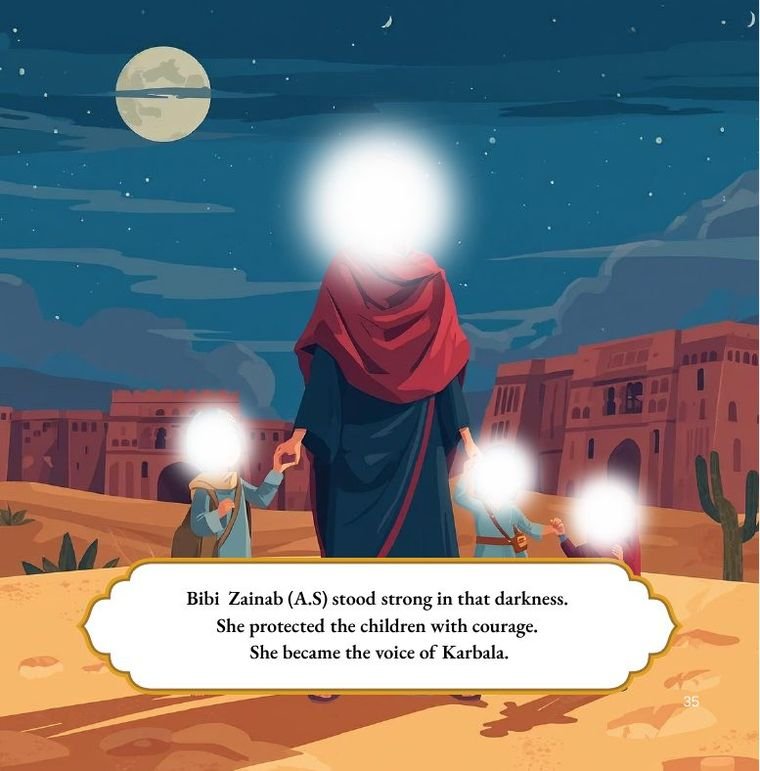
After Ashura: Bibi Zainab (S.A) and Imam Zain ul Abideen (A.S)
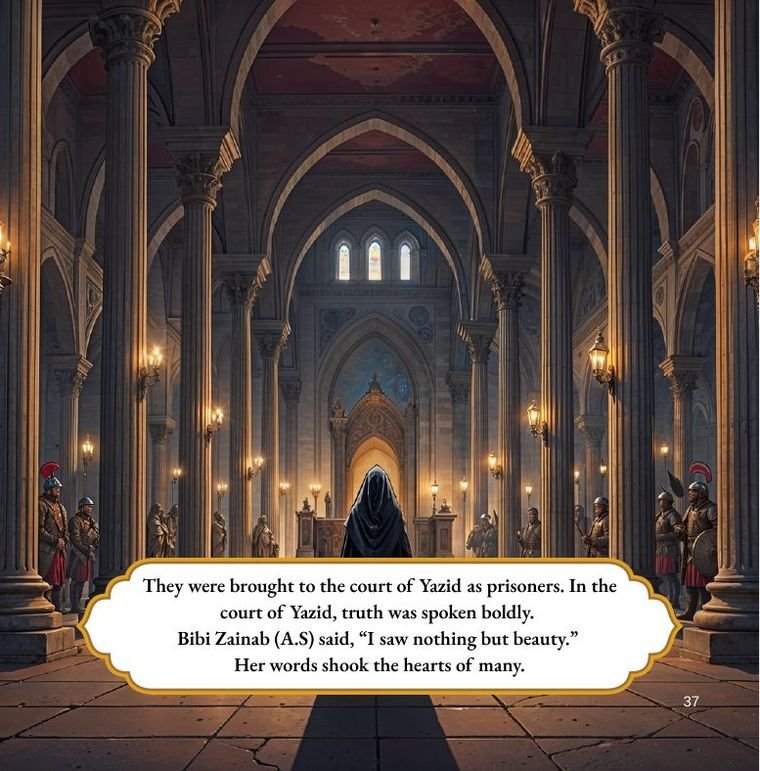
Many children’s books stop at the battle. We chose not to, because the story continues, and it is the part that tells a child what Karbala was for. Bibi Zainab (S.A) protected the children and became the voice of Karbala. Imam Zain ul Abideen (A.S), though ill, carried the message forward. And in the court of Yazid, the book says, truth was spoken boldly.
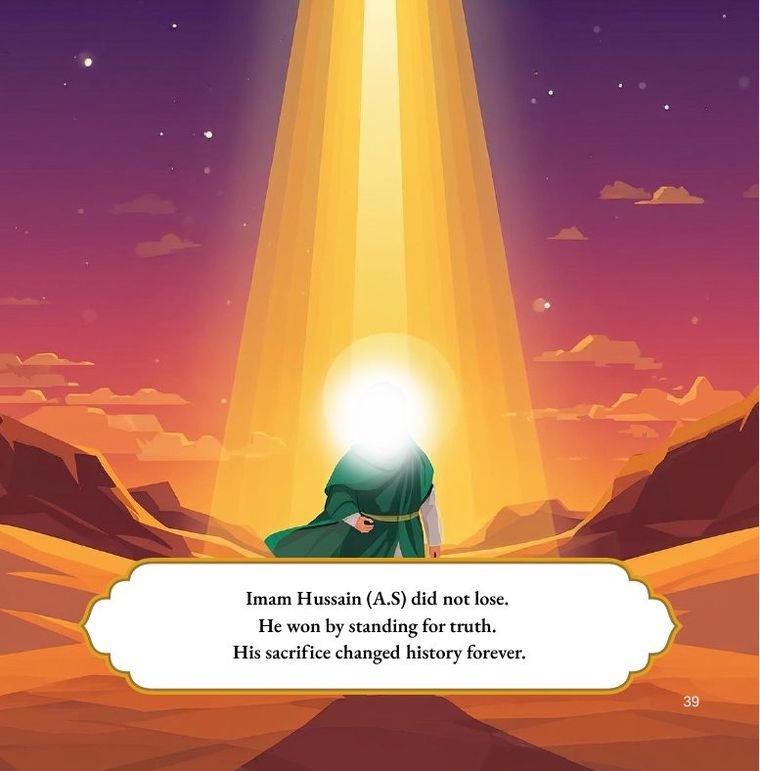
“Imam Hussain (A.S) did not lose”
The ending is the part we hope children keep: “Imam Hussain (A.S) did not lose. He won by standing for truth. His sacrifice changed history forever.” Four pages of lessons follow, about standing for what is right even when alone, about patience, and about trusting Allah in every moment.
How to read it with your child
- Start with a calm place and time. Not at bedtime on a tired night. A weekend afternoon works well.
- Read it yourself first. Know where you may want to pause.
- Let the child lead. Some children want the whole book; others one page. Both are fine.
- Name feelings out loud. “This page is sad. It is okay to feel sad.” Then point to the hope: they stood for truth, and Allah is with the truthful.
- End with the dua, and a salawat together.
For more on handling sadness and age, see how to explain Karbala to a child, and for the ten days of Muharram, a gentle plan for children at home.
The reflection questions
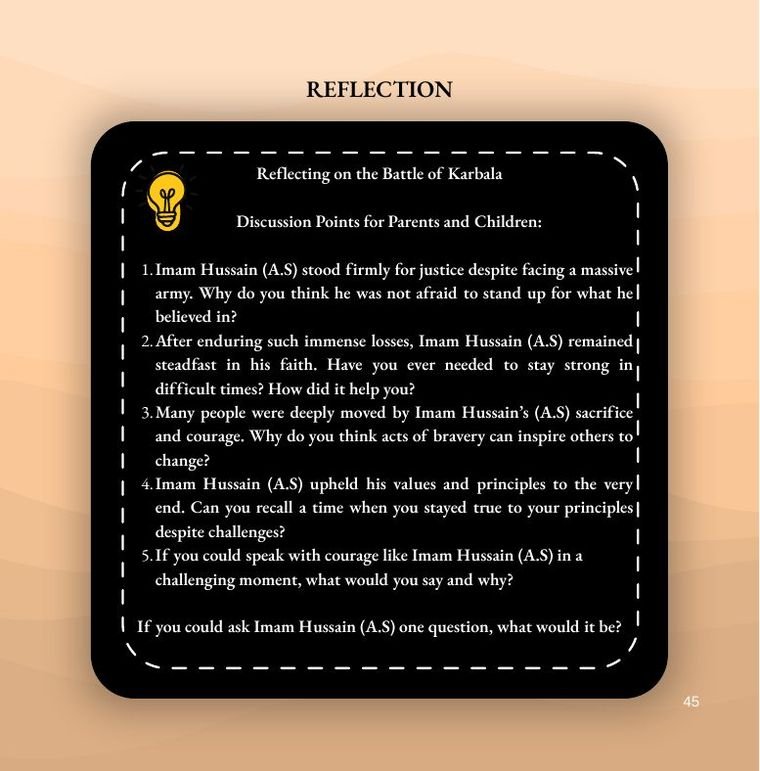
At the back, the book asks parents and children to discuss five questions. They are meant to move a child from listening to thinking. For example:
- Why do you think Imam Hussain (A.S) was not afraid to stand up for what he believed in?
- Have you ever needed to stay strong in difficult times? How did it help you?
- Why do you think acts of bravery can inspire others to change?
The last question is our favourite: “If you could ask Imam Hussain (A.S) one question, what would it be?” Write down your child’s answer. In a few years you will want to read it again.
Where it fits: the Heroes of Karbala series
This is the gateway to a series of ten books, and each of the other nine follows one hero, and the quality they teach: loyalty, patience, courage, speaking the truth. Read the full story first, then let your child choose who they want to meet next. You can read why we created the series in our guide to the series.
 Hazrat Abbas (A.S)The Lion Who Never Let Go · Ages 7–14
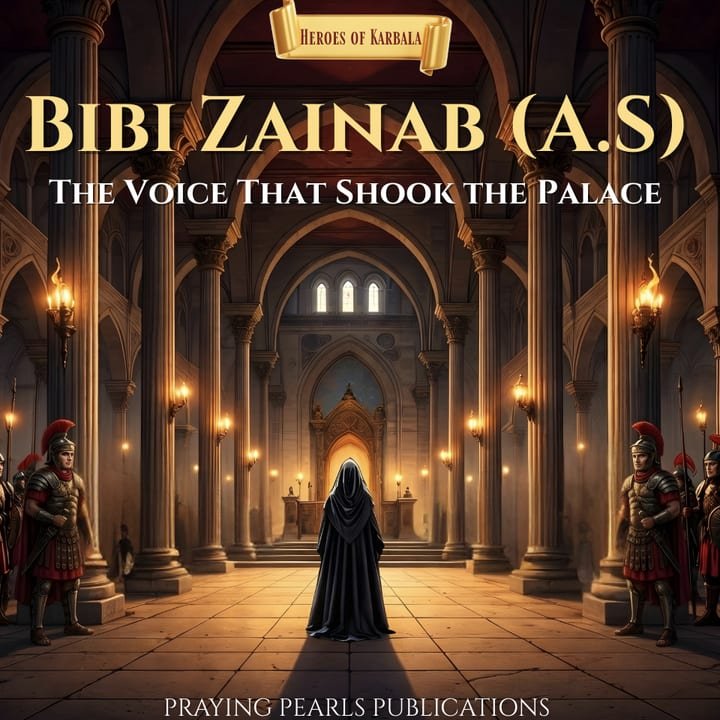 Bibi Zainab (A.S)The Voice of Karbala · Ages 7–14
A note from us
We are not scholars. We are two friends doing our little part to serve the Ahlul Bayt. We have taken great care with this book, but if you notice a mistake, please tell us through our contact page and we will correct it with thanks.
Frequently asked questions
What age is “The Story of Karbala for Kids” for?
It is written for ages 7 and above. Younger children can listen with a parent who chooses what to read aloud and what to leave for later. See our guide to explaining Karbala by age.
Is the book graphic or frightening?
No. The story is told honestly but gently. The battle is shown as silhouettes and landscape, the faces of the holy family are drawn as soft light, and the book dwells on courage, loyalty and faith rather than violence.
Does it cover Bibi Zainab (S.A) and Imam Zain ul Abideen (A.S)?
Yes. After Ashura the story continues with Bibi Zainab (S.A), who protected the children and became the voice of Karbala, and Imam Zain ul Abideen (A.S), who carried the message forward. The book ends on the lessons of Karbala.
Is there a free version?
Yes. The complete illustrated book is available as a free ebook. Enter your name and email on our free book page and we will send it to you.
What is in the book besides the story?
A letter to parents, five reflection questions for parents and children to discuss, a salawat, and a short greeting to Imam Hussain (A.S) (the ziyarat greeting). It is the first book of the Heroes of Karbala series.
We found a mistake. What should we do?
Please tell us through our contact page. We are not scholars, only servants of the Ahlul Bayt doing our little part, and we will check and correct it in the next edition.