For Parents
Why Teach Your Child to Say Salawat Every Day
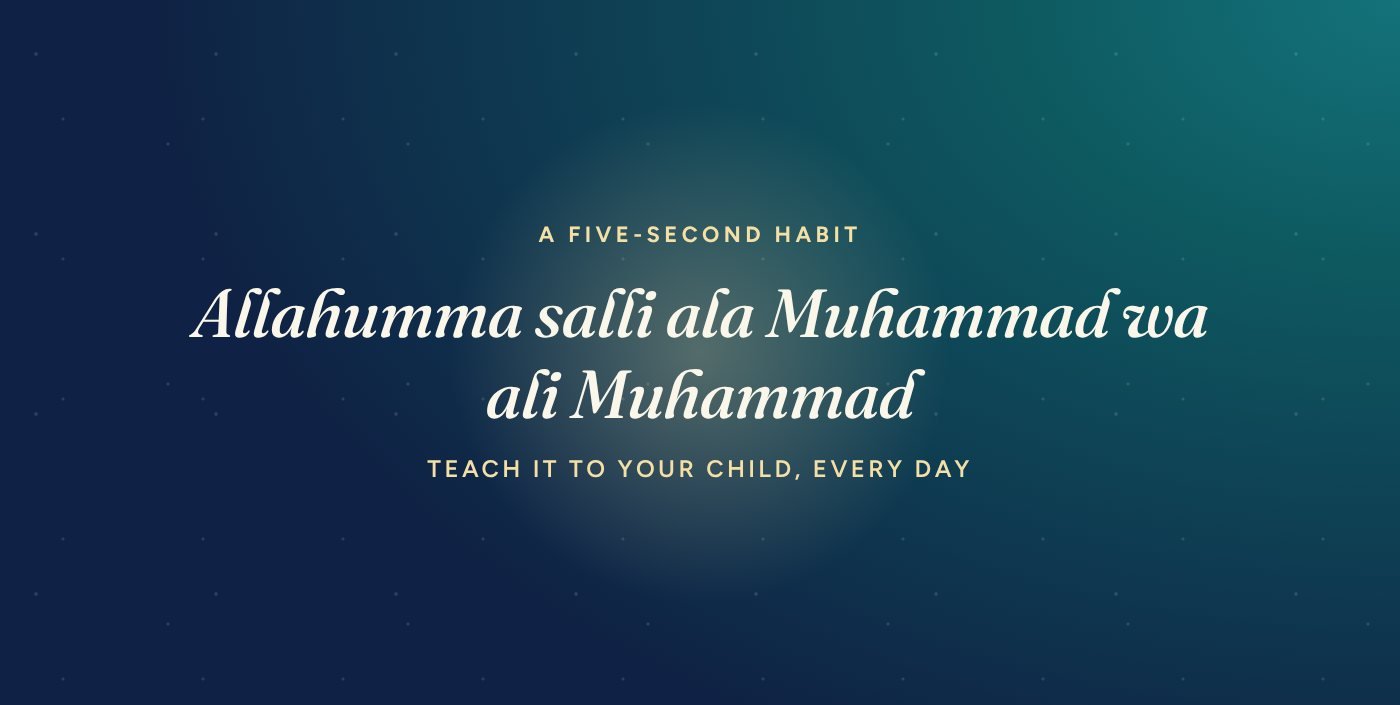
If you could give your child one tiny habit that takes about five seconds, costs nothing and ties their heart to the Prophet (P.B.U.H) every single day, would you? That habit exists, and you already know it: salawat.
اللَّهُمَّ صَلِّ عَلَى مُحَمَّدٍ وَآلِ مُحَمَّدٍ
Allahumma salli ala Muhammad wa ali Muhammad
O Allah, send blessings upon Muhammad and the family of Muhammad
What salawat means
“Salawat” means asking Allah to send blessings and mercy upon the Prophet Muhammad (P.B.U.H) and his family. It is a dua, a loving little prayer, and it is one of the few acts in the Quran that Allah describes Himself and His angels as doing.
“Indeed, Allah confers blessing upon the Prophet (P.B.U.H), and His angels [ask Him to do so]. O you who have believed, ask [Allah to confer] blessing upon him and ask [Allah to grant him] peace.”
Quran, Al-Ahzab 33:56When we send salawat, we join something Allah and His angels are already doing.
That is a beautiful thing to tell a child. They are not performing a duty for a stranger. They are joining a chorus of love that was already in motion.
Why “wa ali Muhammad”: the Prophet (P.B.U.H) and his family together
The salawat we teach has two halves: the Prophet (P.B.U.H) and his family. It is reported in the well-known hadith collections of both Sunni and Shia Muslims that when the companions asked the Prophet (P.B.U.H) how they should send salawat on him, he taught them to include his family. Many scholars therefore consider a salawat without the family to be incomplete.
For a Shia household this is more than a rule. It is a small, daily reminder of who the Ahlul Bayt are: Lady Fatima (S.A), Imam Ali (A.S), Imam Hassan (A.S), Imam Hussain (A.S) and the Imams after them. Every time your child says “wa ali Muhammad,” they are saying the family’s names into their own life, even before they can recite their stories.
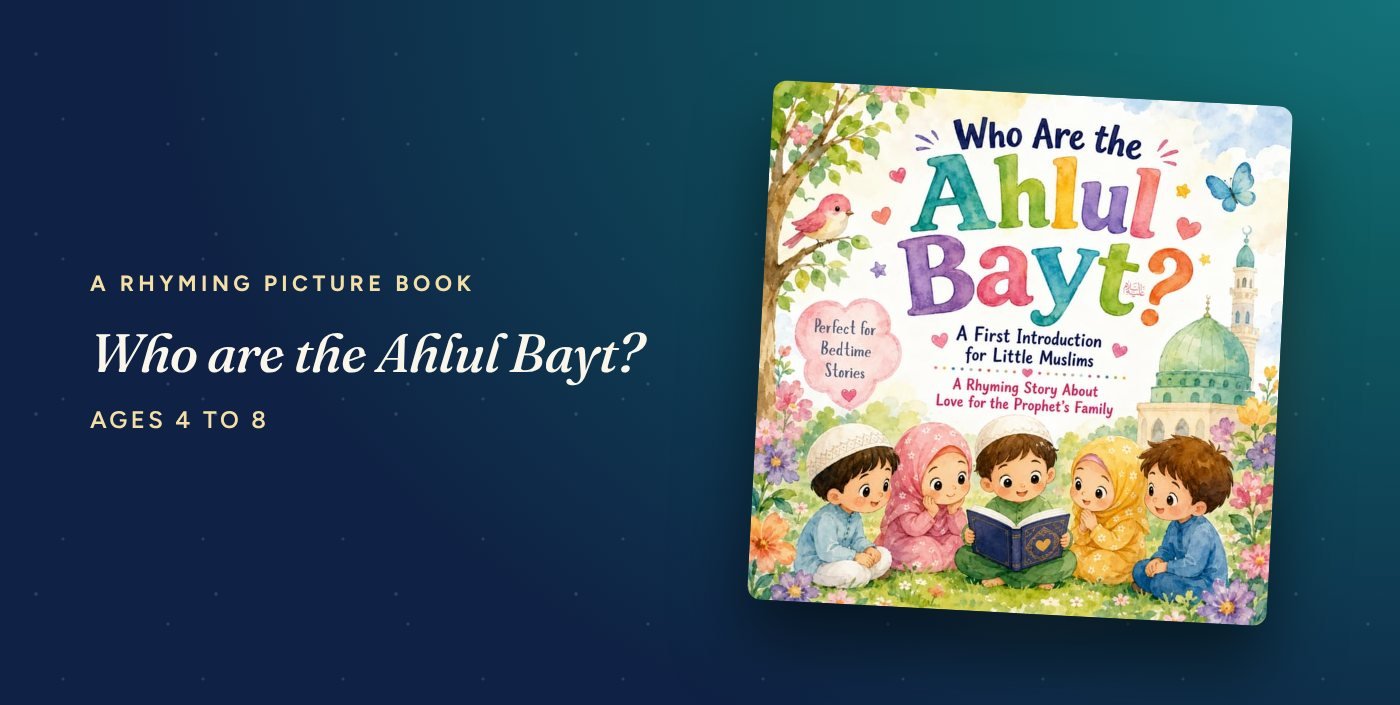
If your child asks who is the family of Muhammad?, you have your opening. Our guide, Who Are the Ahlul Bayt?, gives simple answers for every age.
Why make it a daily habit
- It builds love before knowledge. A child who says the Prophet’s (P.B.U.H) name with a blessing every day grows up with a warm association long before they read a single hard fact.
- It is tiny. Five seconds is a habit even a tired family can keep. A small act done every day beats a grand plan done once.
- It is a dua. It teaches a child that they can speak to Allah in their own words, any time, in any place.
- It calms the heart. A repeated, gentle phrase is soothing at bedtime, in the car or before a test.
- It carries the family forward. Children copy what they hear. When they hear it from you every day, it becomes theirs.
When children can say it: five easy moments
- When they hear the Prophet’s (P.B.U.H) name. Say it together, softly, every time. Children learn the pattern fast.
- Morning, as they wake. A blessing before the day begins.
- Before a meal. After “Bismillah,” add one salawat.
- In the car. Ten salawat on the way to school replaces a lot of noise.
- At bedtime. The most powerful slot. Dim the light, say three together, and end with a hug.
How to teach it by age
Ages 2 to 4: say it, don’t explain it
Toddlers learn rhythm and tone. Say “Allahumma salli ala Muhammad wa ali Muhammad” in a slow, happy voice and let them join in on the last words. Add a small ritual: a kiss on the forehead, or a gentle clap. Keep it to a few seconds.
Ages 5 to 7: give it a picture
Now they ask why. Tell them: “Allah loves the Prophet (P.B.U.H) very much, and so do we. When we say this, we ask Allah to be kind to him and to his family.” Use a pearl jar (see below) so they can see the habit grow.
Ages 8 to 12: give it a meaning
Introduce the Quran verse (33:56) and the idea that Allah and the angels do this too. Let them say the Arabic and the English. Connect it to stories of the Ahlul Bayt, so each salawat has faces and memories behind it.
Teens: make it theirs
Teens resist routines that are imposed. Invite, don’t insist: share why it matters to you, suggest it as a way to settle anxiety, and let them choose when to say it. A quiet example at home does more than a lecture.
Five playful ways to make it stick
- The pearl jar. For every salawat, a bead goes into a jar. When it is full, celebrate with a special story night. (The pearl is the heart of everything we do at Praying Pearls, and it makes a lovely family symbol.)
- A bead string. A simple ten-bead string for little fingers turns saying it into a calm, hands-on moment.
- Salawat before stories. Start every Ahlul Bayt story with one salawat. Children quickly learn that story time begins with a blessing.
- A family chart. Make a simple weekly chart. Colour one star each night everyone has said their three.
- Say it for others. “Let’s say salawat for Nani today.” Children love to give gifts of dua.
Mistakes to avoid
- Making it a punishment. Never use salawat as a consequence. The point is love.
- Rushing the words. Say it clearly and calmly so children learn it correctly and enjoy it.
- Chasing big numbers. A calm three every day is worth far more than a forced hundred.
- Skipping the family. Teach the full form, “wa ali Muhammad,” from the beginning, so they never have to relearn it.
Pair it with stories
Salawat grows deeper when children know the people they are blessing. A story about Lady Fatima’s (S.A) kindness, or Imam Hussain’s (A.S) courage, turns the words into a relationship. Our guide How to Help Your Child Love the Prophet (P.B.U.H) and His Family has stories, rituals and ideas for every age.
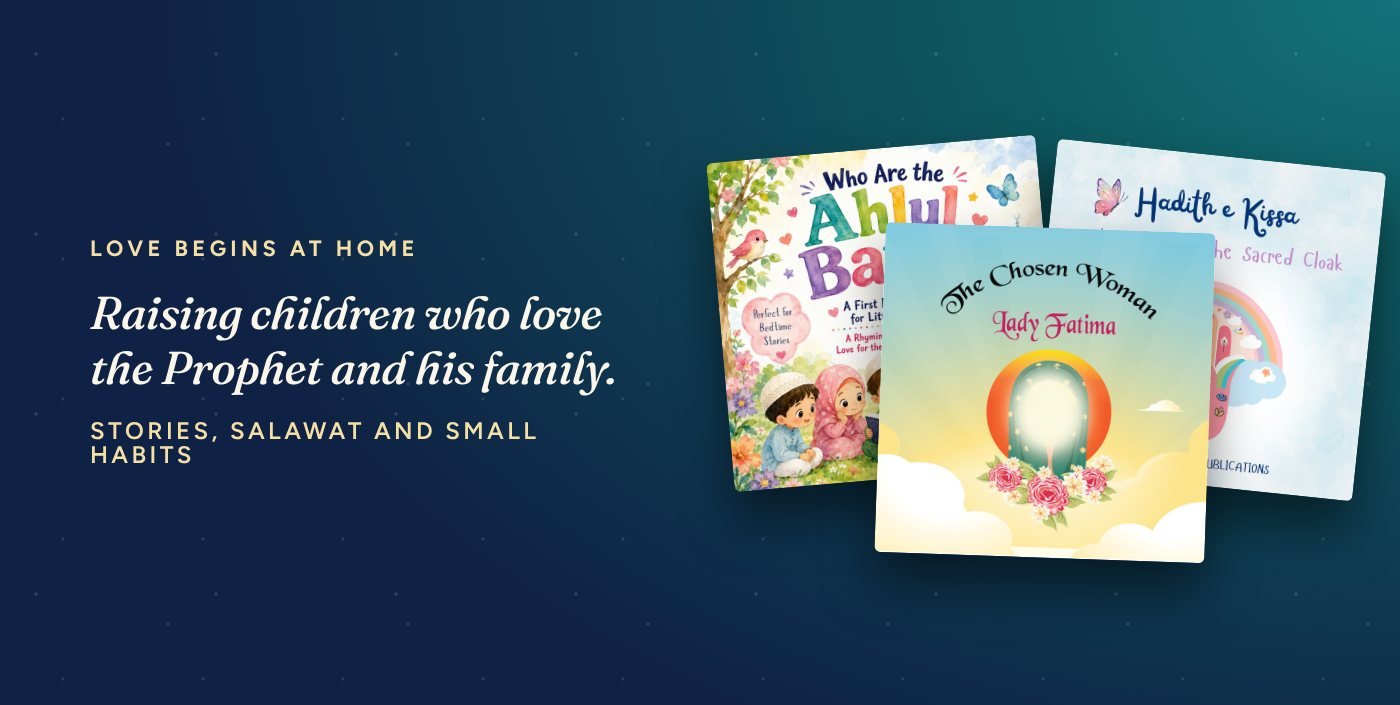
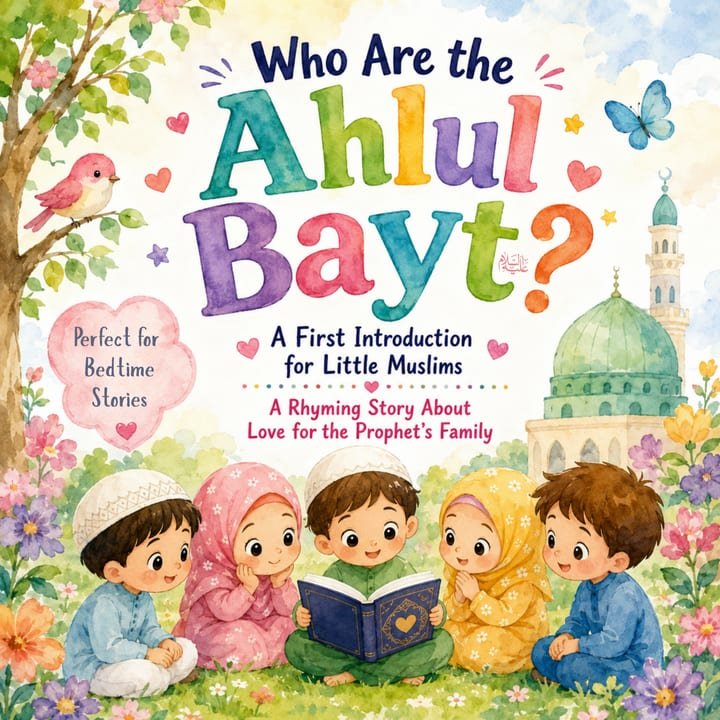 Who Are the Ahlul Bayt? (A.S)A First Introduction for Little Muslims · a first introduction to the Prophet’s (P.B.U.H) family, in rhyme · Ages 4–8
 Hadith e KissaThe Event of the Sacred Cloak · the story of the five under the cloak · Ages 4+
And if you want something to print, our free PDFs for Muharram, Eid-e-Ghadeer and Eid-e-Zahra make wonderful salawat-time companions. Choose one on the Free PDFs page.
Common questions
What does “Allahumma salli ala Muhammad wa ali Muhammad” mean?
It means “O Allah, send blessings upon Muhammad and the family of Muhammad.” It is a short dua in which we ask Allah to honour the Prophet (P.B.U.H) and his family, the Ahlul Bayt.
Why do we include “wa ali Muhammad” (the family of Muhammad)?
Because the Prophet (P.B.U.H) taught his companions to send salawat on him together with his family. This teaching is reported in the well-known hadith collections of both Sunni and Shia Muslims, and many scholars describe a salawat that leaves out the family as incomplete. It is also a daily way to teach children who the Ahlul Bayt are.
At what age can a child start saying salawat?
Almost as soon as they can repeat words. Toddlers can say “Allahumma salli ala Muhammad” with you, and add “wa ali Muhammad” as they grow. Younger children learn by hearing you say it, so start with your own voice.
How many times a day should my child say it?
Start with three: once in the morning, once at a meal and once at bedtime. Consistency matters more than numbers. Let it grow naturally, and never turn it into a punishment or a chore.
What if my child gets bored or forgets?
That is normal. Tie salawat to something they already do, such as brushing teeth, getting into bed or hearing the Prophet’s (P.B.U.H) name, and make it playful with a jar of pearls, a bead string or a family chart.