For Parents
Remembering Lady Fatima (S.A) with Children: A Gentle Guide and Free Activity Book
Every year, many Shia families set aside the days known as Ayyam-e-Fatimiyya, the Days of Fatima, to remember Lady Fatima al-Zahra (S.A). Children notice these days. They see the black clothes, the majalis, the quiet in the house, and they ask: who was she, and why do we miss her so much?
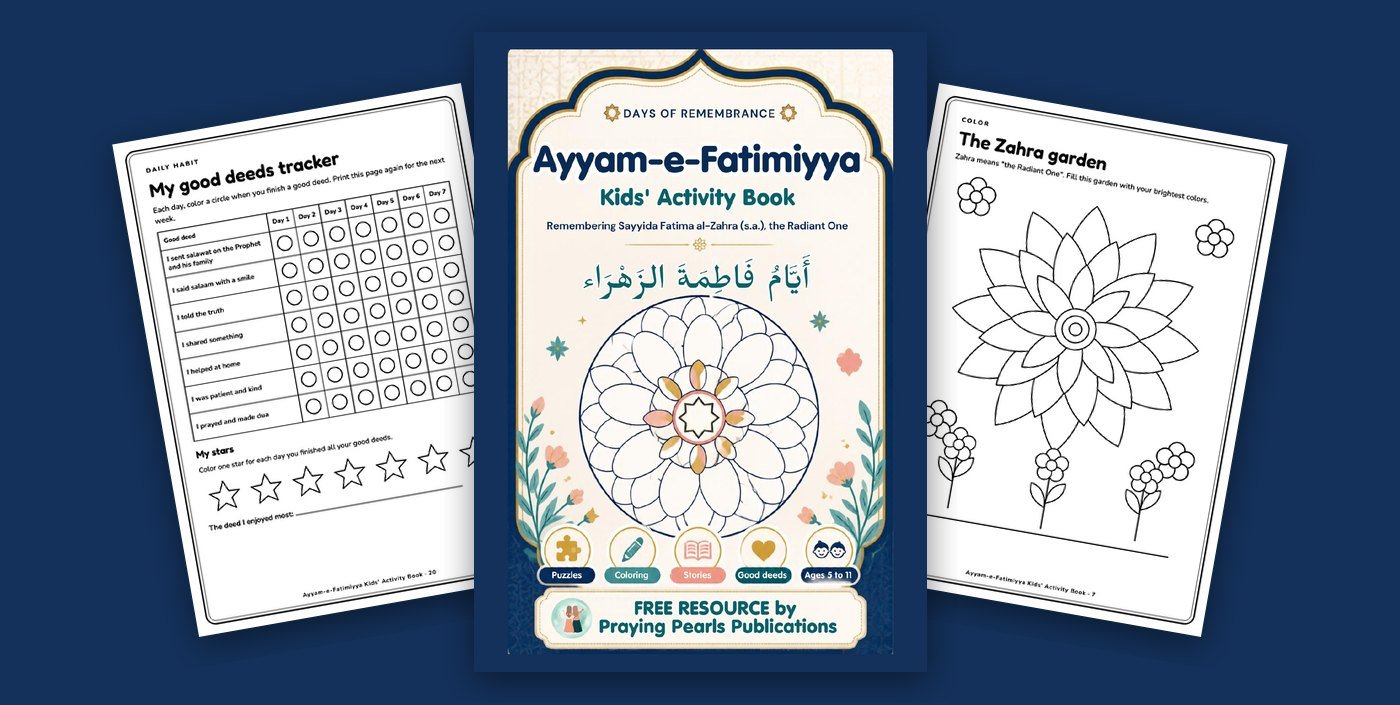
We made a free activity book to help parents and teachers answer that question gently. This guide explains how it works, and offers a few simple ways to use it, with love and respect.
Who was Lady Fatima al-Zahra (S.A)?
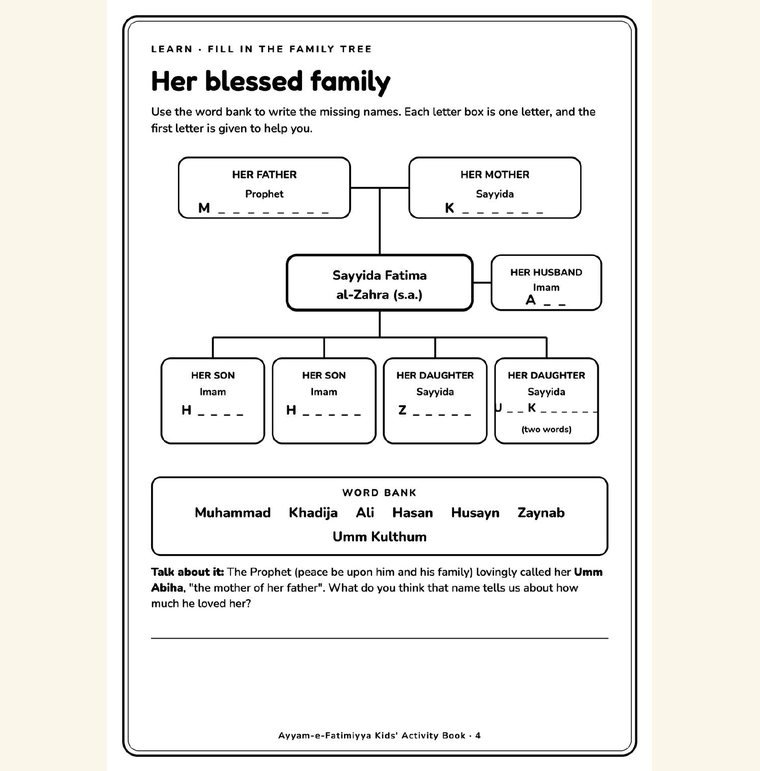
For a child, the best place to begin is with the person. She was the much-loved daughter of the Prophet Muhammad (P.B.U.H) and Lady Khadija (S.A). She married Imam Ali (A.S), and together they raised Imam Hassan (A.S), Imam Hussain (A.S), Lady Zainab (S.A) and Bibi Umm Kulthum (S.A).
Her best-known title is al-Zahra, “the Radiant One”. She is also remembered as al-Siddiqa (the Truthful), al-Tahira (the Pure), al-Mubaraka (the Blessed) and al-Batool (the Devoted). The Prophet is reported in both Sunni and Shia sources to have said that Fatima is a part of him, and he is reported to have called her Umm Abiha, “the mother of her father”, a name that tells a child how tenderly she was loved.
That is enough for a first conversation. A child who knows her as a kind, truthful, generous person already knows what matters most.
Start with her character, not the hard parts
These days also carry sorrow, and every family has its own way of holding it. Our suggestion is simple: let character come first. Talk about how she shared her food with people in need, how she spoke the truth, how patient and kind she was. Then share the sadder parts of history gently, in the way your family and community tradition guides you, and when your child is ready.
The activity book follows the same approach. It focuses on kindness, truthfulness, patience and generosity, and it does not go into the painful details. That is left to parents and teachers, who know their children best.
A story of giving
One of the pages tells the story many families love to share: the family of the Prophet (P.B.U.H) giving their own food, over three days, to a poor man, an orphan and a prisoner, saying they wanted only the pleasure of Allah. The Quran describes this kind of giving in Surah al-Insan (76:8-9): “And they give food, in spite of their love for it, to the needy, the orphan and the captive, saying: We feed you only for the sake of Allah.” Many commentaries connect these verses to the household of the Prophet (P.B.U.H).
It is a lovely story to read aloud, because a child can answer its questions: Who came to the door? What did they do with their own meal? How would you feel? As we note in the book, please check the story with your teacher for its sources.
The tasbih of Lady Fatima (S.A)
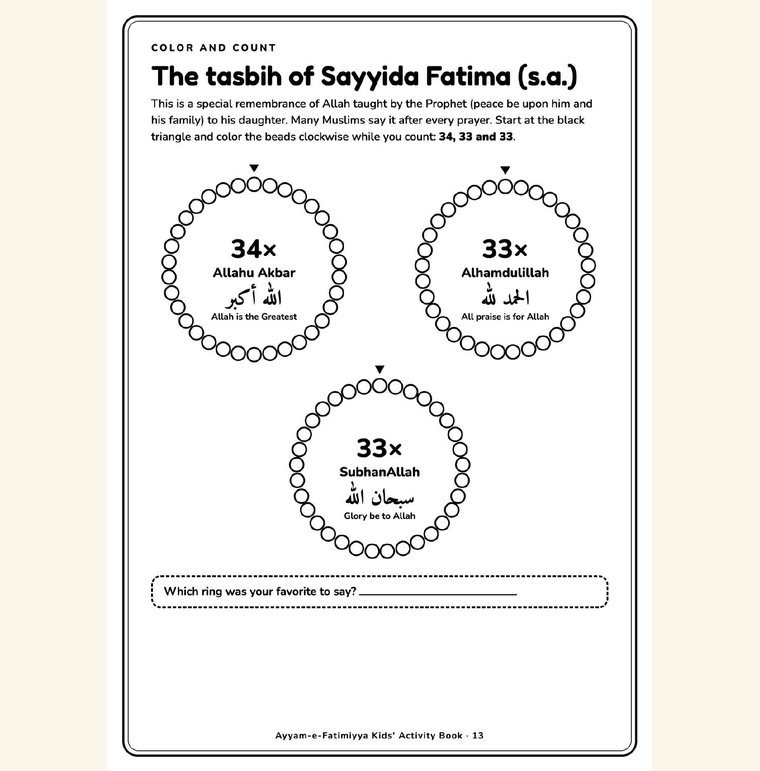
Many Muslims recite a short remembrance of Allah, taught by the Prophet (P.B.U.H) to his daughter, that bears her name: Allahu Akbar 34 times, Alhamdulillah 33 times and SubhanAllah 33 times. Shia families recite it after every prayer. In the book, children colour three rings of beads while they count, so the remembrance becomes something they can do with their hands.
What is inside the book
The book has 25 pages, all in black and white, so any home printer works and little ink is used. It is made for ages 5 to 11.
- Learn: who she was, her blessed family tree, her beautiful names, and a story about giving.
- Puzzles: two word searches, a maze, a crossword, dot-to-dot, a counting page and an unscramble.
- Colour: a Zahra garden, her name, a star pattern and a basket of bread.
- Create and reflect: the tasbih, “What would you do?”, fill in the blanks, a salaam letter and a certificate.
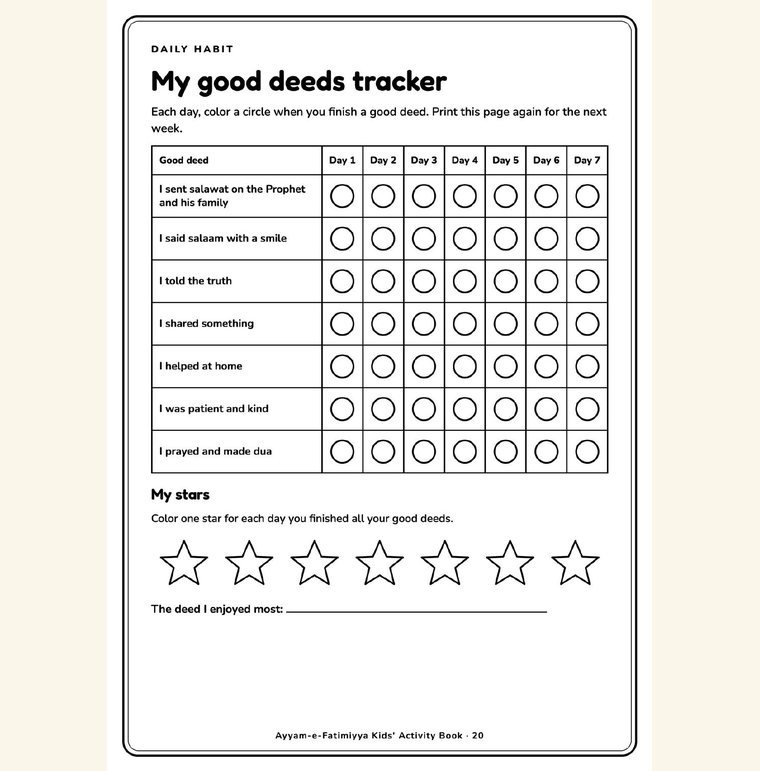
- Good deeds: a seven-day tracker so the days end with something done, not only something read.
- For grown-ups: a note on how to use the book respectfully, printing tips and an answer key.
No faces or figures of the Holy Family are drawn anywhere in the book. It uses flowers, patterns and beautiful designs, and it invites parents to encourage children to colour with the same spirit.
One week together, one page a day
You do not need to finish the book quickly. A gentle rhythm works well, especially in the evening when children are calm:
- Begin with salawat. Say Allahumma salli ala Muhammad wa Aali Muhammad together.
- Day 1: read “Who was Lady Fatima (S.A)?” and fill in the family tree.
- Day 2: learn her names and do the first word search.
- Day 3: read the story of giving and talk about it.
- Day 4: colour the Zahra garden while you talk about kindness.
- Day 5: colour the tasbih beads and recite it together.
- Day 6: “What would you do?” and the salaam letter.
- Day 7: look back at the good deeds tracker, and give the certificate.
Using the pages with respect
- Begin with salawat, and keep the atmosphere calm and kind.
- Encourage children to colour flowers, patterns and designs, and not to draw faces.
- Keep finished pages in a folder or scrapbook, and off the floor, because many carry blessed names.
- Print on A4 at 100%, or choose “fit to page” for Letter. Print the answer key separately if you like.
- Follow your own scholar or centre for dates and customs.
Get the free book
The Ayyam-e-Fatimiyya Kids' Activity Book is free for families, teachers and weekend schools. Enter your email in the box on this page and we will send it right away. You can also see all our free printables on the free PDFs page.
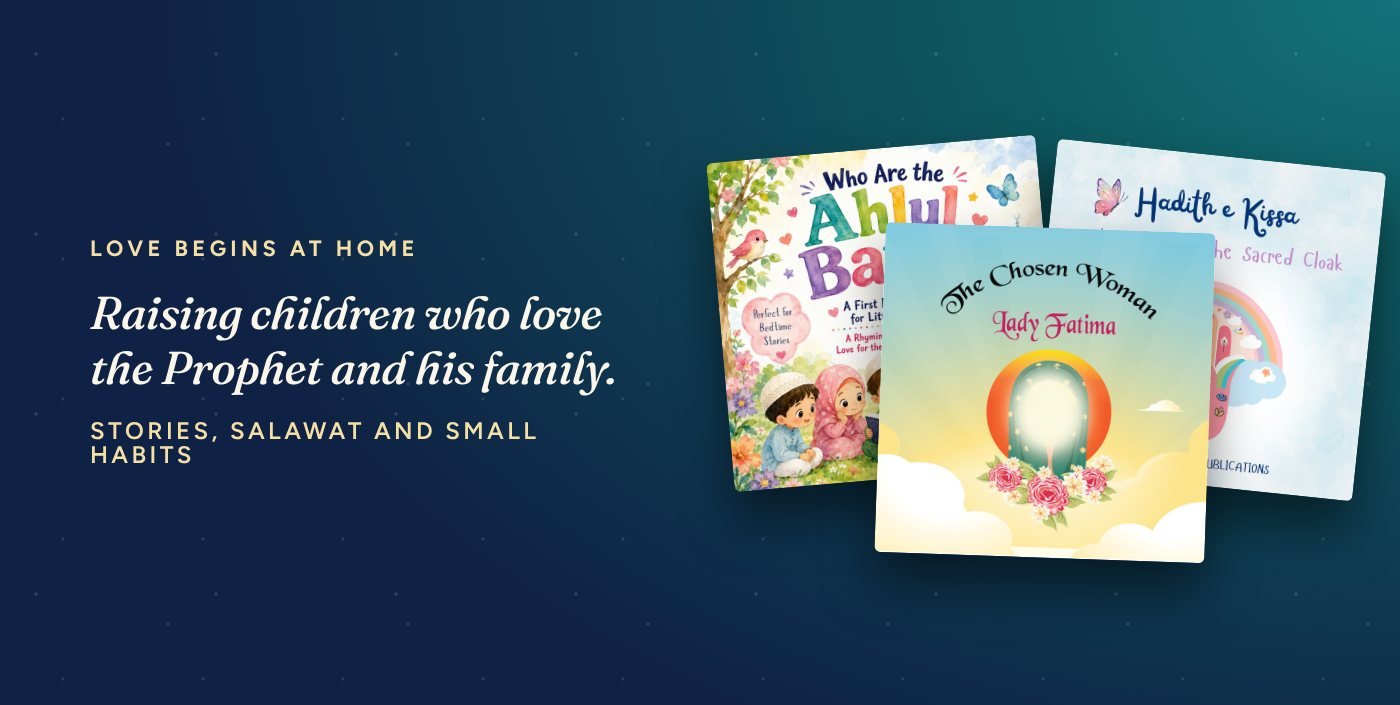
If your child enjoys it, our guide to helping your child love the Prophet (P.B.U.H) and his family and the full library of children's books are good next steps.
Frequently asked questions
What is Ayyam-e-Fatimiyya?
It means “the Days of Fatima”. These are days when Shia families and communities remember Lady Fatima al-Zahra (S.A), the daughter of the Prophet (P.B.U.H), with salawat, majalis, dua and acts of kindness. Different communities and scholars observe different dates, so please follow your own marja or local centre.
How do I explain Ayyam-e-Fatimiyya to a young child?
Start with who she was, not with the sad parts of history. She was the much-loved daughter of the Prophet (P.B.U.H), known for kindness, truthfulness, patience and generosity. Share the harder parts of history gently, when your child is ready and in the way your family tradition guides you.
What ages is the activity book for?
It is made for ages 5 to 11. Younger children can colour and listen while a parent reads; older children can do the puzzles, the crossword and the story questions on their own.
Are the faces of the Holy Family drawn in the book?
No. There are no faces or figures of the Holy Family anywhere in the book. It uses flowers, patterns and beautiful designs, and it asks parents to encourage children to colour in the same spirit.
Is it really free?
Yes. Enter your email on this page and we send the PDF to your inbox right away, with a download button on screen. We also send a short series of emails about our books and free printables, and you can unsubscribe in one click.
How should we treat the printed pages?
Many pages carry blessed names. We suggest keeping finished pages in a folder or scrapbook, and keeping them off the floor. Print on A4 at 100%, or choose “fit to page” for Letter. Every page is black and white, so any home printer works.
We found a mistake. What should we do?
Please tell us. We are not scholars, only servants of the Ahlul Bayt doing our little part. We will check it with knowledgeable people and correct it.